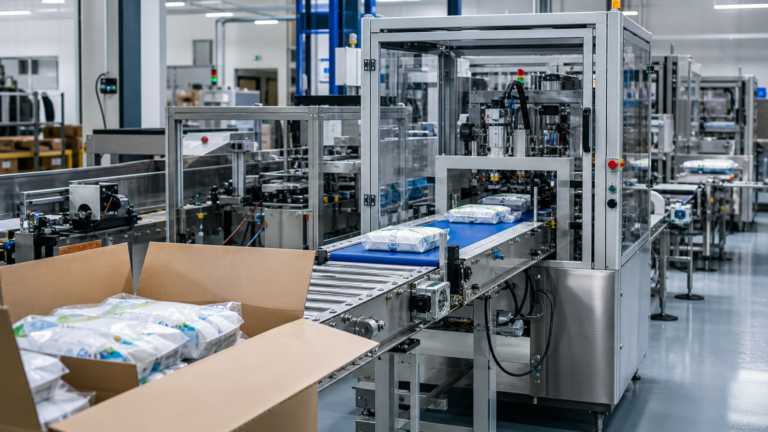


A box sealing machine, often searched in Thailand as เครื่องซีลกล่อง, is used to close corrugated cartons with consistent tape sealing before storage, shipping or downstream handling. It is usually installed near the end of a packaging line, after products have been packed into cartons and before labeling, weighing, inspection or palletizing.
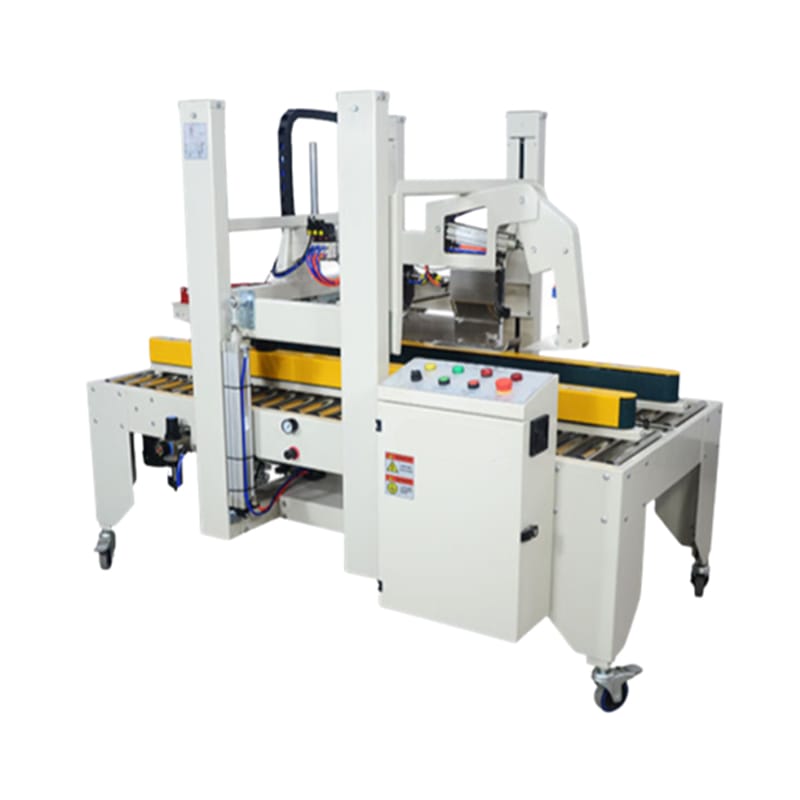
เครื่องซีลกล่อง (Box Sealing Machine): What It Does
A box sealing machine closes the top or bottom flaps of a corrugated carton and applies tape in a controlled position. In many factories it is also called a carton sealer machine, tape sealing machine or box closing machine. The main purpose is to make carton closing more consistent, especially when the production line handles repeated carton sizes or a steady daily output.
For a complete view of machines in this group, see the เครื่องซีลกล่อง and carton sealer category. This category connects the guide with practical machine models used for corrugated box sealing and end-of-line packaging.
How a Box Sealing Machine Works in a Packaging Line
The process usually starts when a filled carton enters the machine through a conveyor. The machine guides the carton into position, controls the side belts or drive belts, and applies tape through the upper or lower taping head. Depending on the model, the operator may fold the carton flaps manually, or the machine may include automatic flap folding before sealing.
Stable carton feeding is important. If carton dimensions vary too much, or if the flaps are not prepared correctly, sealing quality can become inconsistent. For this reason, carton size, product weight and conveyor direction should be reviewed before choosing a machine.
How to Choose a Box Sealing Machine for Your Production Line
The right machine should match the real operating conditions of the factory. A high-speed model is not always the best choice if the upstream packing process is slower, and a compact semi-automatic model may not be enough for a line that runs continuously throughout the day.
1. Carton Size and Carton Quality
Start with the smallest and largest cartons used in regular production. Check carton width, height, length and material strength. A carton with uneven flaps or heavy contents may require better side control, stronger drive belts or a more stable sealing section.
2. Required Line Speed
Line speed should be measured in cartons per minute. The selected machine should match the total production flow, not only the maximum machine specification. If the sealing machine is slower than the filling or packing process, it can become a bottleneck.
3. Frequency of Size Changeover
Factories that run one carton size for long periods can use a standard machine with manual adjustment. If carton sizes change often, a model with easier width and height adjustment can reduce downtime and support smoother changeovers.
4. Tape Type and Sealing Requirement
Most carton sealing machines use pressure-sensitive tape, but tape width, tape quality and sealing pressure should be confirmed. The chosen machine should apply tape cleanly and hold the carton closed through handling, storage and transport.
Common Types of Carton Sealer Machines
Semi-automatic carton sealers are suitable when operators still prepare or fold carton flaps before feeding the box into the machine. Automatic carton sealers are more suitable when the line requires continuous carton movement, reduced manual handling and more consistent sealing quality.
For practical examples, review Carton sealer machine NW-GKI-50 and Carton sealer machine NW-GKI50. These product pages help compare machine layout and application for box sealing operations.
Integration with Other Packaging Equipment
A box sealing machine often works with conveyors, carton erectors, labelers, checkweighers, coding systems or inspection equipment. Before installation, check conveyor height, carton travel direction, available maintenance space and the operator access point for tape replacement.
If the line has limited space or requires a specific carton flow direction, models such as Carton sealer machine NW-GKC-50D or Carton sealer machine NW-GKE-50P may be reviewed as part of the selection process.
Checklist Before Choosing a Machine
- Minimum and maximum carton size
- Target cartons per minute
- Carton weight and corrugated board strength
- Manual or automatic flap folding requirement
- Available floor space and conveyor direction
- Connection with labelers, inspection machines or conveyors
Practical Evaluation Tip
Before final selection, prepare sample cartons, tape type, product weight and target output. These details help the technical team evaluate the most suitable box sealing machine and recommend a layout that fits the production line.
Related Machines for เครื่องซีลกล่อง and Carton Sealing
To compare suitable machines, start from the เครื่องซีลกล่อง and carton sealer category, or review related models such as NW-GKI-50, NW-GKI50, NW-GKC-50D and NW-GKE-50P. These pages provide a clearer path from the guide article to the machine pages that support actual purchasing decisions.
Discuss Your Packaging Line with Newgate Machine
Newgate Machine can review carton size, target output, available space and integration needs to recommend a carton sealing solution that fits your production process.