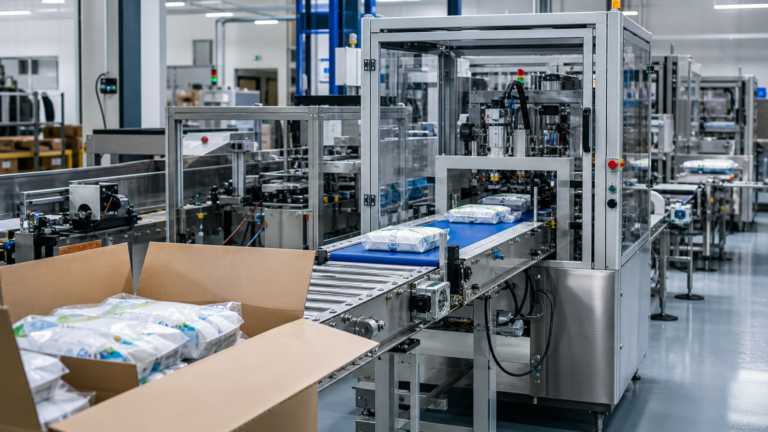


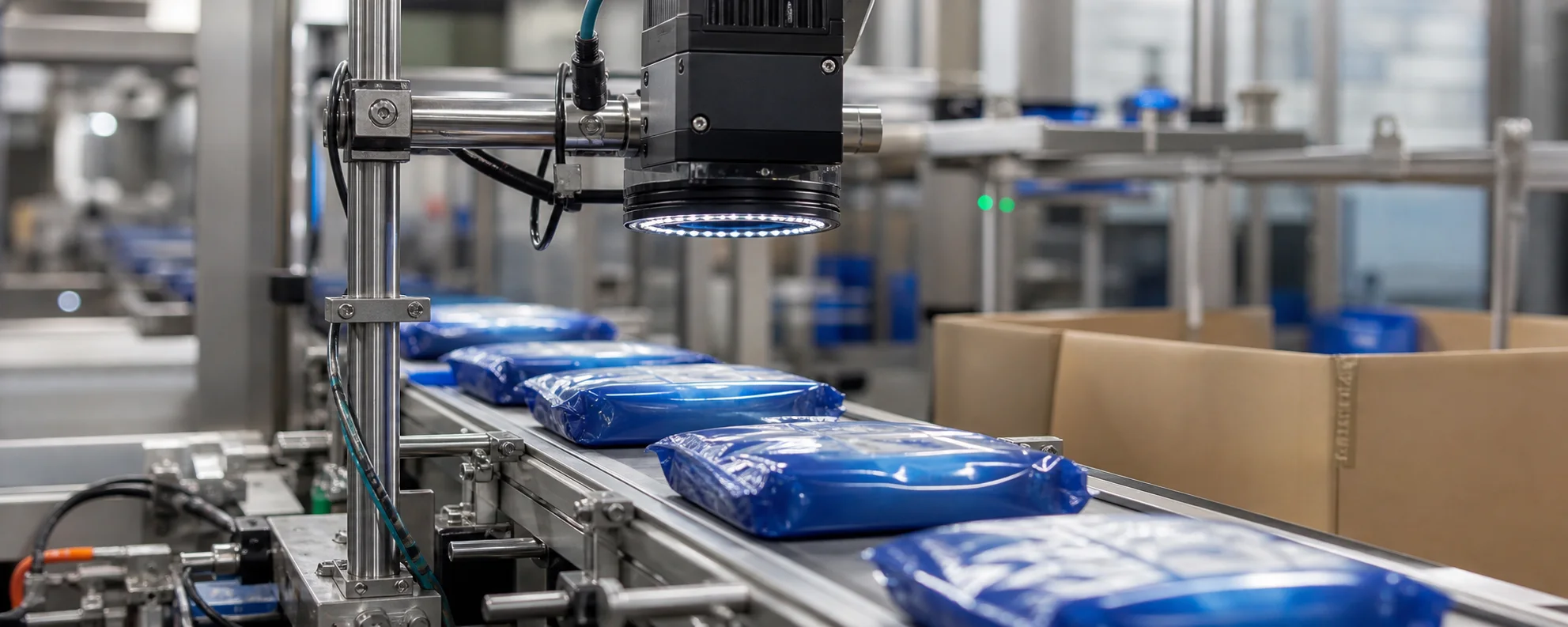
Vision inspection can provide repeatable checks at a speed that is difficult to maintain manually. It is most valuable when the factory has a clear requirement, the relevant feature can be seen reliably and the line can remove a non-conforming pack without disturbing accepted production.
The system should be selected as part of the complete packaging process, including lighting, product presentation, timing, rejection and records.
Identify the Check That Requires Consistency
Typical uses include presence and readability of codes, label position, product count, cap or closure presence, orientation, color reference and overall pack presentation. Choose a specific requirement rather than adding inspection without a defined decision.
Confirm the Feature Can Be Presented Reliably
A camera can inspect only what it can see. Product position, conveyor spacing, lighting, surface reflection and pack movement all affect image quality. Stable infeed and suitable fixtures may be required before inspection is effective.
Make the Requirement Measurable
Use a measurable condition that operators, engineers and commercial teams can review together. coding system can be included where equipment interfaces or wider line coordination affect the outcome.
Place Cameras at the Right Station
Inspect after the feature is created and before more value is added downstream.
Review Trends, Not Only Individual Rejects
Repeated reject patterns can reveal an upstream material, machine or operating issue.
Connect Inspection to Controlled Rejection
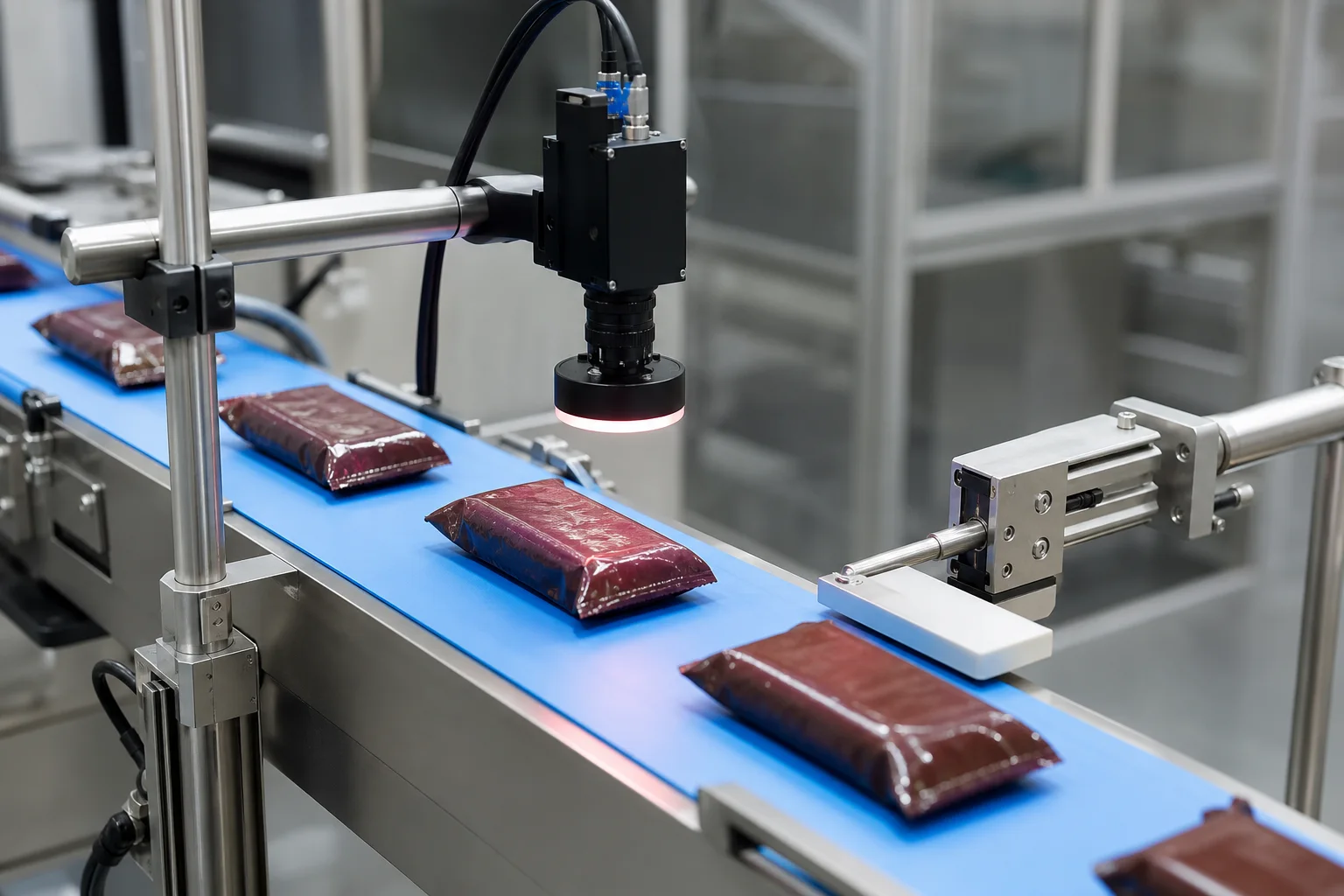
The reject station should remove the identified pack at the correct time and provide a clear location for segregation. Records should distinguish reject causes so that the factory can correct recurring process conditions.
Validate the System With Real Samples
Use accepted and non-conforming examples that represent normal product and material variation. Confirm the system detects the required condition without creating excessive false rejects.
Vision Inspection Data and Rejection Control
Vision inspection should be planned with both detection and rejection control in mind. It is not enough for the camera to identify an issue if the line cannot remove the incorrect pack reliably. The inspection point, reject device, conveyor speed, product spacing and confirmation sensor should work together as one controlled system.
The first step is to define what the system must check. Common applications include date code presence, label position, cap orientation, carton flap condition, product count, barcode readability and pack presentation. Each check should have a clear pass or reject condition so that operators understand what the system is protecting.
Use Inspection Records for Practical Improvement
Inspection data can help the factory improve the process when it is reviewed correctly. Reject counts, defect types, time stamps and image records may show whether the issue comes from material variation, machine adjustment, printing, product feeding or operator setup. This makes vision inspection useful not only for quality control but also for process understanding.
Rejection control should also be verified during testing. The team should confirm that rejected packs are removed, collected safely and not able to return to the acceptable product flow. For high-speed lines, reject confirmation is especially important because product spacing and conveyor movement can change quickly.
Train Operators on Normal and Abnormal Conditions
Operators should know how to respond to repeated rejects, camera alarms and recipe changes. Clear training helps vision inspection support packaging line quality without creating unnecessary stoppages.
Validating Vision Inspection Before Full Production
Vision inspection should be validated with real products, real packaging materials and the intended line speed. The team should confirm that acceptable packs pass, incorrect packs reject and borderline cases are reviewed according to the quality standard. This helps avoid unnecessary rejects while still protecting the process.
Validation should include the full reject sequence. The camera result, reject timing, product spacing, collection area and reject confirmation should all be checked together. If the reject system is not reliable, the inspection result cannot fully protect the packaging line.
Review Recipes After Product or Material Changes
When labels, cartons, print areas or product colors change, the inspection recipe may need review. Keeping this review process clear helps vision inspection remain reliable as the packaging line evolves.
Practical Steps for Implementation
A practical improvement program is easier to sustain when the intended result, current state and verification method are agreed before changes are made.
- Define the feature and acceptance criteria.
- Stabilize product presentation and lighting.
- Test representative good and non-conforming samples.
- Verify rejection, records and operator response.
Frequently Asked Questions
Can vision inspection replace all manual quality checks?
It can automate selected visible checks, while other quality activities may still require sampling or operator review.
What causes false rejects?
Unstable product position, inconsistent lighting, reflective surfaces, material variation and unsuitable tolerance settings can contribute.
How should rejected packs be handled?
They should be clearly segregated and reviewed according to the factory quality procedure before any decision on rework or disposal.
Review Vision Inspection for Your Packaging Line
Newgate Machine can help review the required check, product presentation, rejection method and integration points for a suitable inspection solution.