

Flow Pack Vs Shrink Wrap: Table of Contents
Flow pack vs shrink wrap comparison helps factories choose a packaging format based on product protection, speed and presentation. Plastic packaging machines are used across many production lines, but the correct method depends on what the package needs to do. Some products require individual wrapping at a steady speed. Others need grouped protection for storage or display. Food products may require air removal to support preservation and compact packing.
Flow Pack, Shrink Wrap and Vacuum Pack are therefore not interchangeable systems. Each method uses film differently and produces a different packaging result. A careful comparison helps a factory select equipment that suits the product, production volume and downstream handling process.
What Is Flow Pack Packaging?
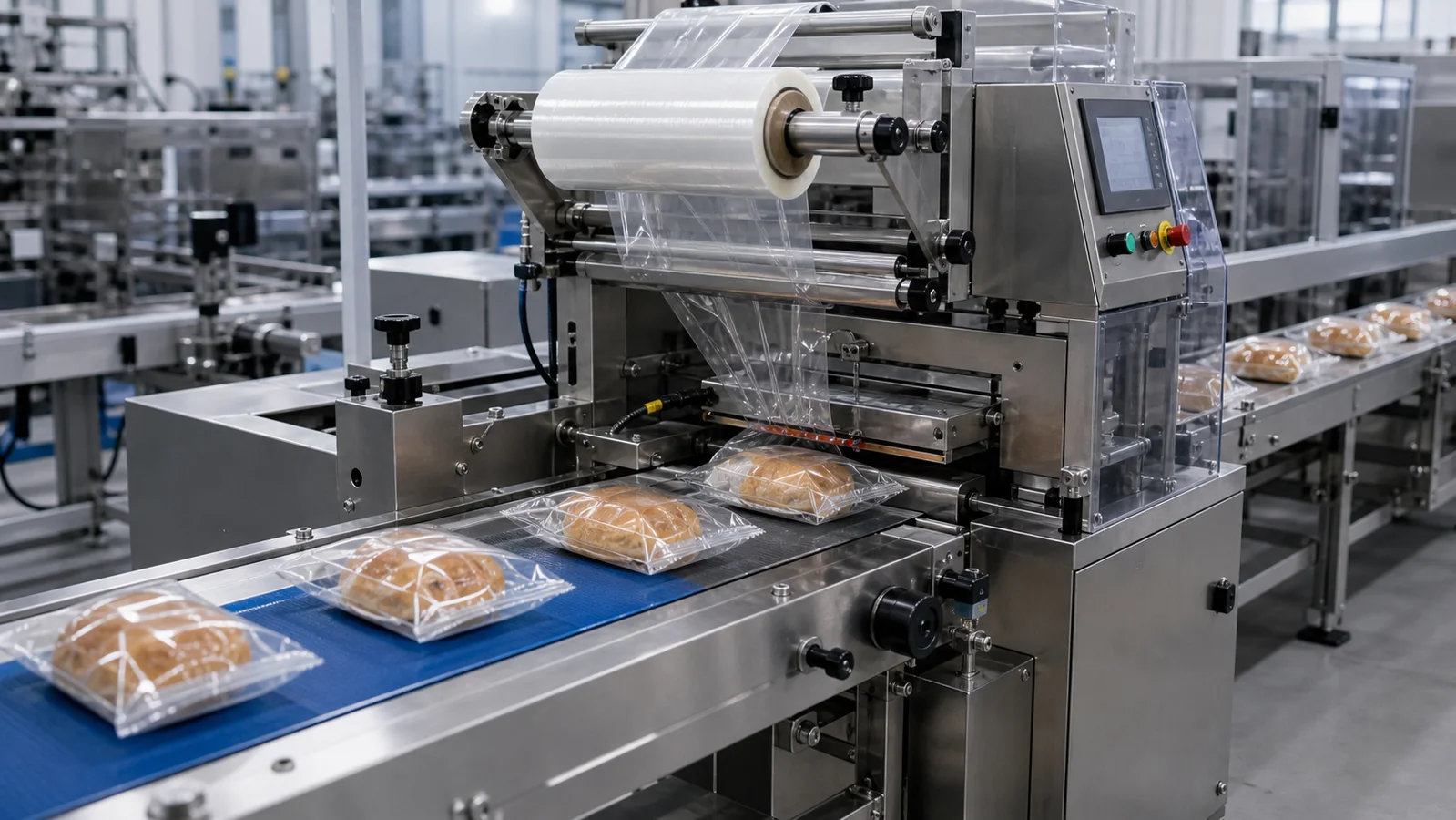
A horizontal flow pack machine wraps products continuously in film and seals the package around each item. The finished pack commonly has a longitudinal seal and end seals, creating an individual pillow-style package.
Products Commonly Packed With Flow Pack
- Bakery products, snacks and confectionery
- Small consumer goods and household items
- Medical or personal care items
- Products that require individual film wrapping
When Flow Pack Is a Practical Choice
Flow Pack is suitable when products are similar in size, can be placed continuously on a conveyor and require consistent individual packaging. The method works well when the line needs a steady packing rhythm and a neat finished pack.
Points to Review Before Selection
Product dimensions, spacing, film type, sealing temperature and required speed should be reviewed together. Product feeding is also important because stable infeed helps the wrapper maintain consistent package length and sealing position.
What Is Shrink Wrap Packaging?
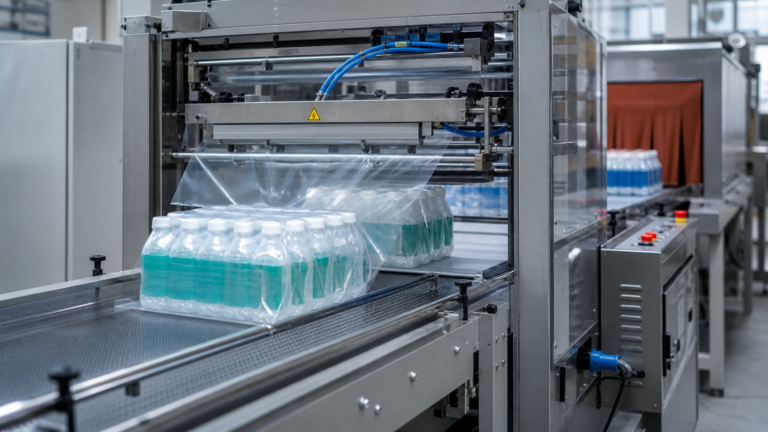
Shrink Wrap uses film that tightens around a product or product group after heat is applied. The process may include a sealing unit followed by a shrink tunnel. It is suitable when products need grouped presentation, surface protection or a compact outer wrap.
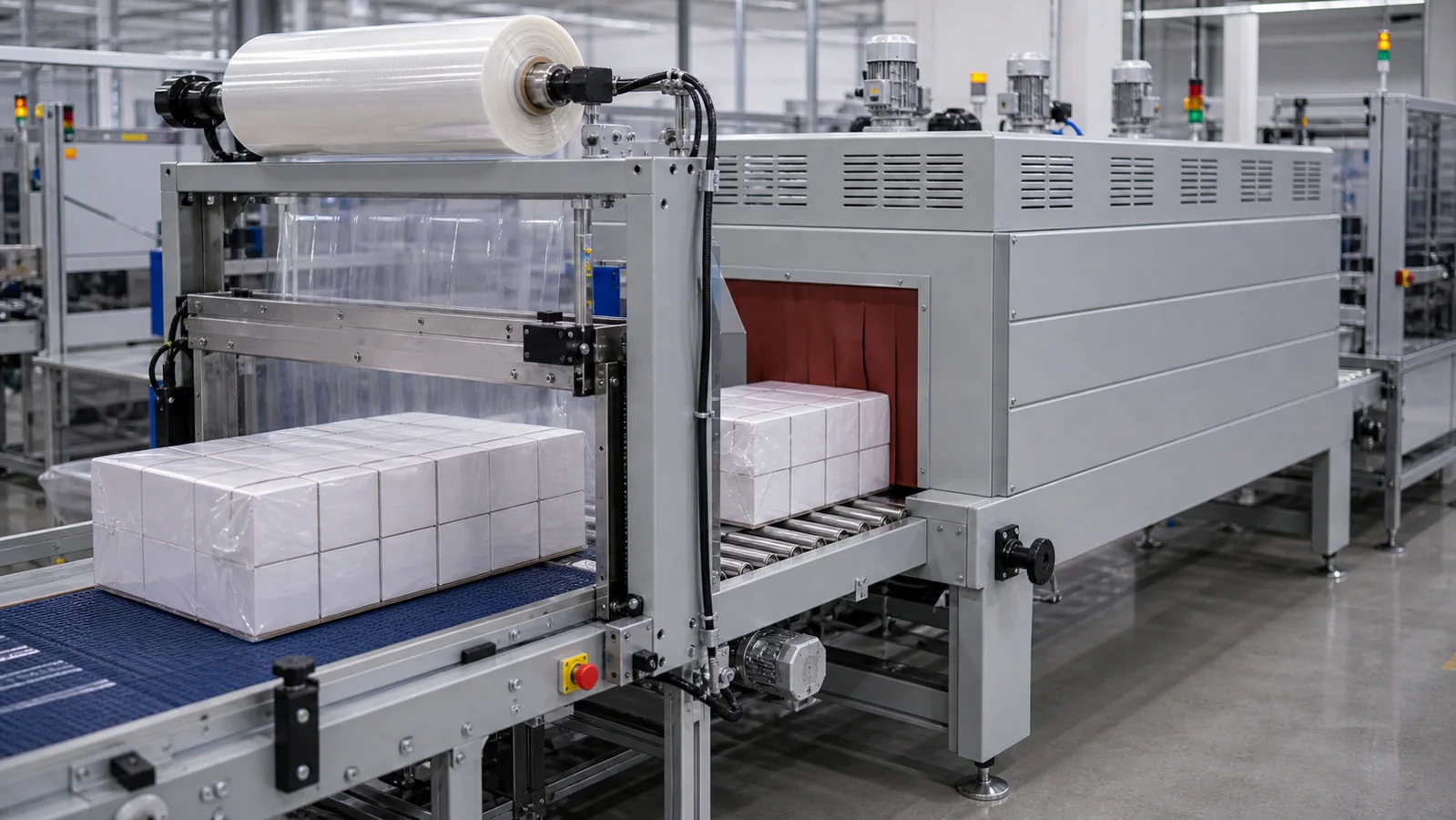
Products Commonly Packed With Shrink Wrap
- Grouped cartons, bottles or multipacks
- Boxed goods requiring an outer protective film
- Retail products that need a tidy grouped presentation
- Products prepared for handling, display or distribution
Side Seal and L-Seal Shrink Wrap Systems
A side seal shrink wrap machine can support continuous packing for products of different lengths. For other product formats, an L-Seal packing machine with shrink tunnel may be suitable when the packaging process requires sealing before heat shrinking.
Points to Review Before Selection
Factories should review product grouping, film type, tunnel temperature, conveyor speed, product dimensions and the required appearance after shrinking. The line layout should also allow suitable space for sealing and tunnel sections.
What Is Vacuum Pack Packaging?
Vacuum Pack removes air from a pouch before sealing. The film fits closely around the product, helping create a compact package and reducing the amount of air inside. This method is commonly associated with food products, ingredients and items that benefit from close-fitting protective packaging.
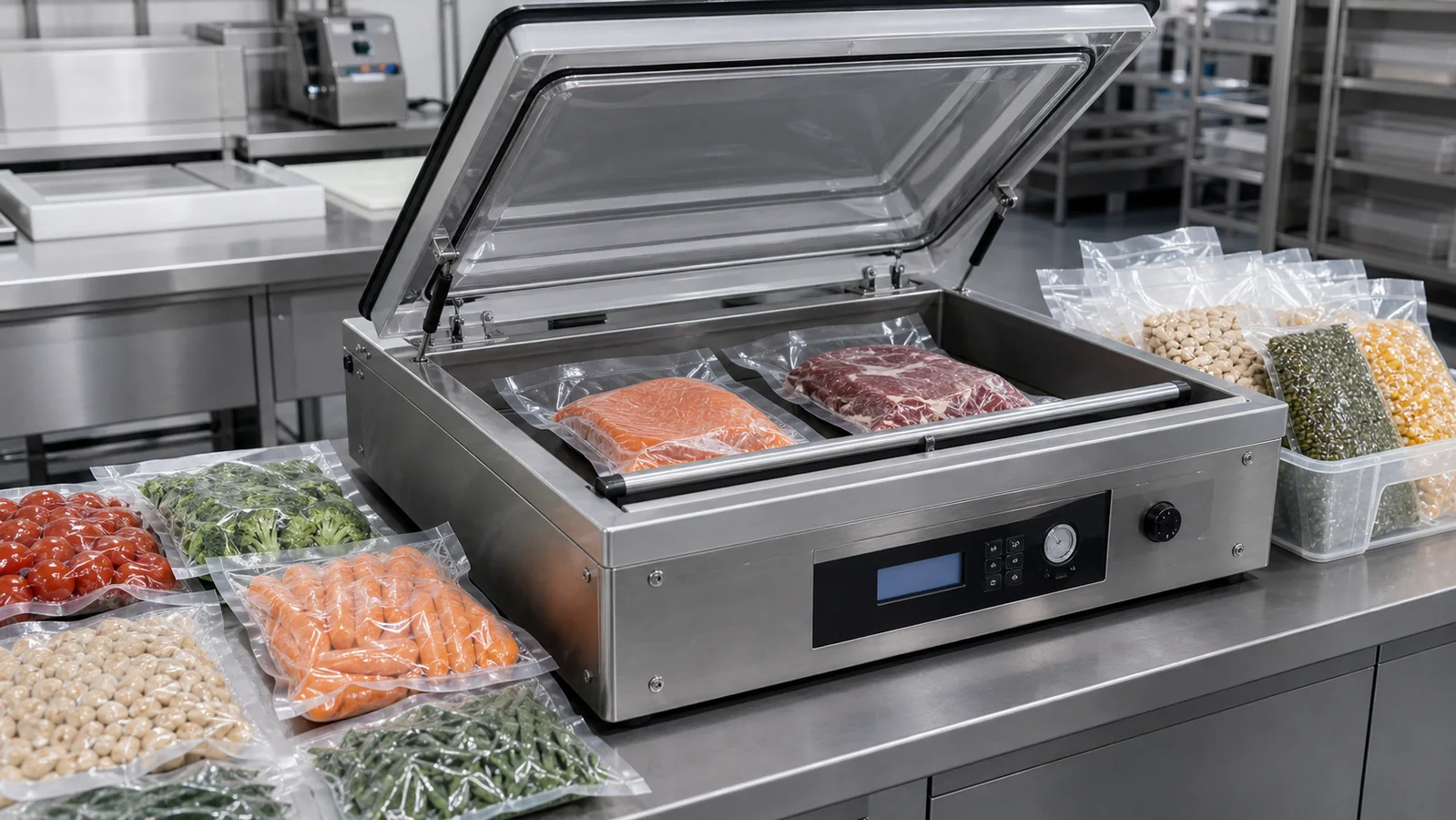
Products Commonly Packed With Vacuum Pack
- Meat, seafood and processed food
- Vegetables, ingredients and prepared food
- Dry ingredients such as beans or grains
- Products that benefit from reduced air inside the package
When Vacuum Pack Is a Practical Choice
Vacuum Pack is suitable when air removal is part of the packaging requirement. The machine, pouch material and sealing condition should be selected according to the product, storage method and food safety process used by the factory.
Points to Review Before Selection
Factories should check pouch dimensions, product moisture, required sealing strength, chamber size, production volume and cleaning requirements. Food production lines should also consider hygiene procedures and material compatibility.
Key Differences Between Flow Pack, Shrink Wrap and Vacuum Pack
The three methods can all be part of a factory packaging plan, but they solve different packaging requirements.
Packaging Result
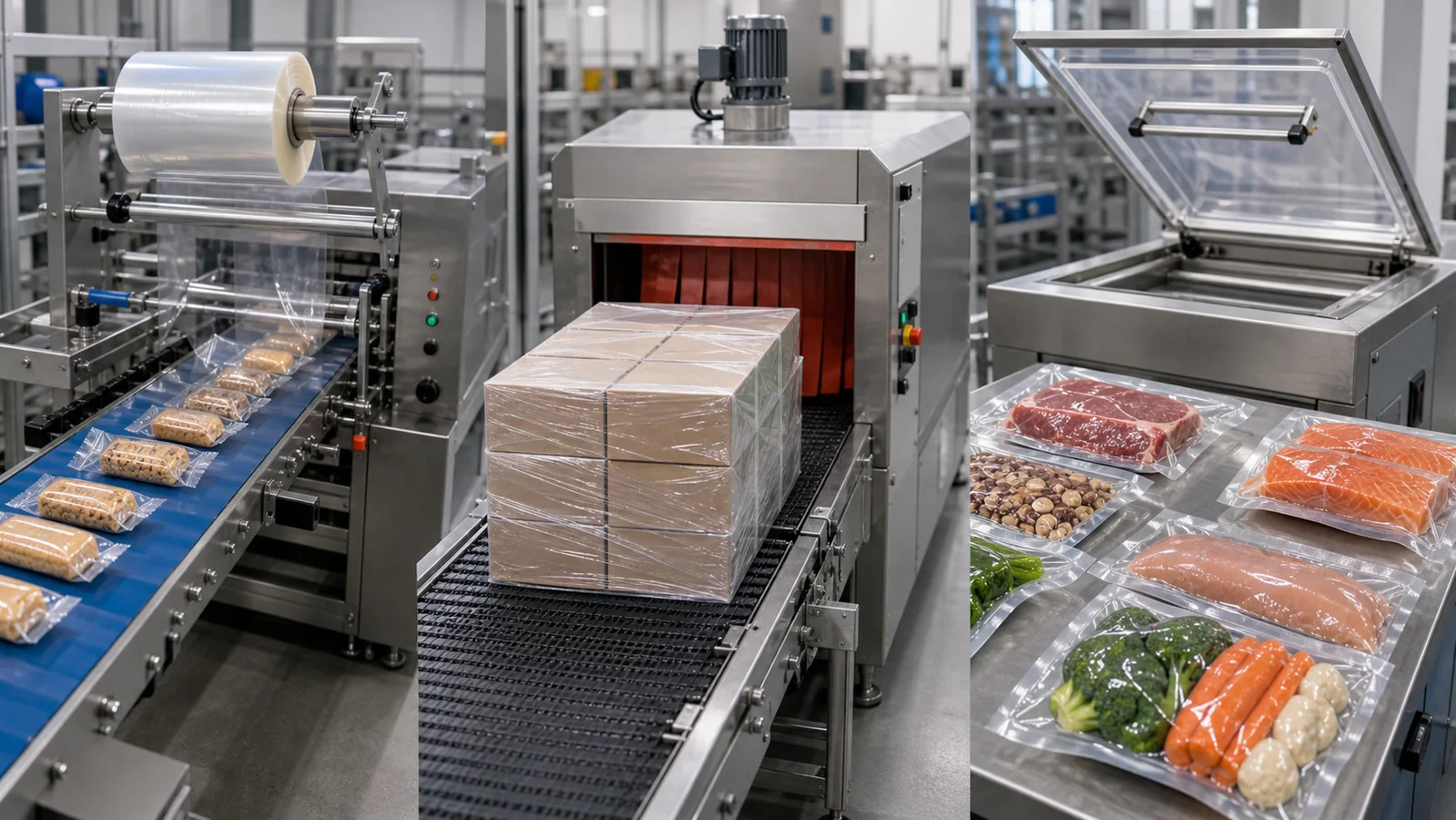
Flow Pack creates an individual sealed film package. Shrink Wrap creates a film layer that contracts around a product or group. Vacuum Pack removes air and forms the pouch closely around the product.
Suitable Product Format
Flow Pack is often selected for continuous individual products. Shrink Wrap is suitable for boxes, grouped items and multipacks. Vacuum Pack is commonly used for food, ingredients and products that require reduced air inside the pouch.
Production Line Design
Flow Pack depends on stable product feeding and continuous sealing. Shrink Wrap requires a suitable sealing and tunnel arrangement. Vacuum Pack requires a chamber or vacuum sealing process that matches the product volume and handling method.
How to Choose the Right Plastic Packing Machine
Before selecting a machine, factories should define the packaging objective and review how the product moves through the line. The right system should match the product format, required output and downstream handling process.
Questions to Review Before Selection
- Does the product need individual wrapping, grouped wrapping or air removal?
- What are the product dimensions, shape and weight?
- What film or pouch material is suitable for the product?
- What output is required per hour?
- Does the machine need to connect with conveyors or upstream equipment?
- What storage, display or transportation conditions follow the packaging step?
- Are hygiene, cleaning or food safety requirements involved?
Review Product Samples Before Confirming the Machine
Product samples, packaging dimensions, film requirements and production targets should be reviewed before confirming a machine specification. This allows the machinery team to match the equipment to actual factory conditions.
Plan a Suitable Plastic Packaging System With Newgate Machine
Newgate Machine supports factories in selecting packaging machinery that fits product characteristics, output requirements and production layout. The team can help review whether Flow Pack, Shrink Wrap or another packaging method is appropriate for the products and operating conditions of your factory.
For a more accurate machine recommendation, prepare product samples, package dimensions, target capacity and the available installation area. Newgate Machine can then review the production process and propose a practical configuration for your line.