

What Is a Cobot in Factory Automation?
A cobot, or collaborative robot, is a robot designed to work alongside people in production environments. Its purpose is not simply to replace manual work, but to support repetitive tasks that require consistency, controlled movement, and predictable timing.
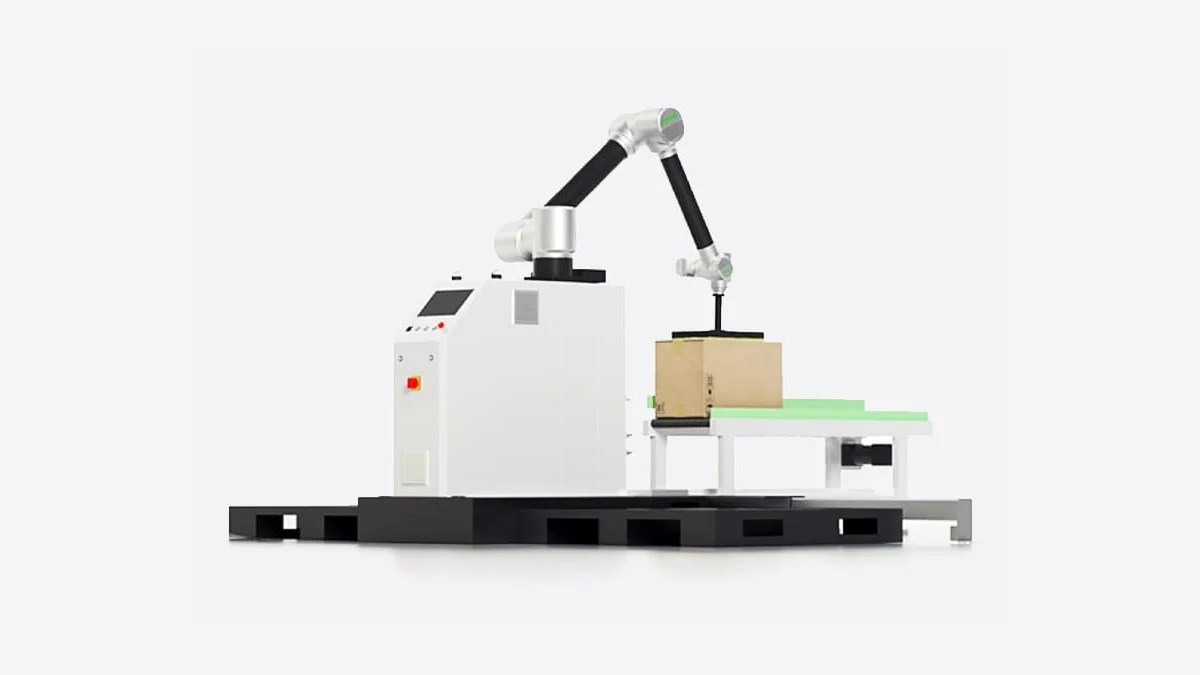
In a medium-sized factory, a cobot is often used for pick-and-place work, carton handling, product positioning, machine tending, and end-of-line processes. One common example is cobot palletizing, where the robot arranges cartons on a pallet according to a defined stacking pattern.
How a cobot differs from a traditional industrial robot
Traditional industrial robots are commonly built for high-speed, high-volume operations in dedicated automation zones. A cobot is typically more compact, easier to integrate into existing work areas, and suitable for tasks where flexibility is important. This makes it a practical option for factories that want to introduce automation in focused stages.
Core parts of a cobot system
A complete cobot system includes more than the robot arm itself. The gripper, conveyor, sensors, controller, software, safety layout, and product flow all affect how the system performs. These elements should match the product weight, packaging size, line speed, and available installation space.
Simple tasks are often the best starting point
Factories usually begin with a task that has a clear sequence, such as lifting cartons from a conveyor, placing products into trays, arranging cartons on a pallet, or supporting a packaging station. These tasks are easier to measure and refine after installation.
Why Medium-Sized Factories Are Choosing Cobots
Medium-sized factories often need automation that improves consistency without requiring a complete redesign of the production line. Cobots fit this requirement because they can be introduced at one workstation first, then expanded as the factory becomes ready for more automation.
They fit into limited production space
Many medium-sized facilities have existing machines, conveyors, operators, and storage zones already arranged within a fixed floor plan. A cobot can often be installed near a conveyor or workstation with a smaller footprint than a large industrial robot cell.
They support product variation
Factories that produce several product sizes need equipment that can adapt to different cartons, trays, packs, or batch quantities. A cobot system can be planned with changeover in mind, including adjustable grippers, updated stacking patterns, and programmable positions.
They strengthen workflow consistency
A cobot helps create a steady rhythm for repetitive work. Operators can continue to manage inspection, line preparation, material supply, and process decisions, while the robot handles repeated motions that benefit from consistent timing.
Common Cobot Applications in Medium-Sized Factories
A cobot can be used in several areas of a factory, but it is most effective when the task is structured, measurable, and connected to a clear production flow. Packaging and end-of-line handling are among the most practical starting points.
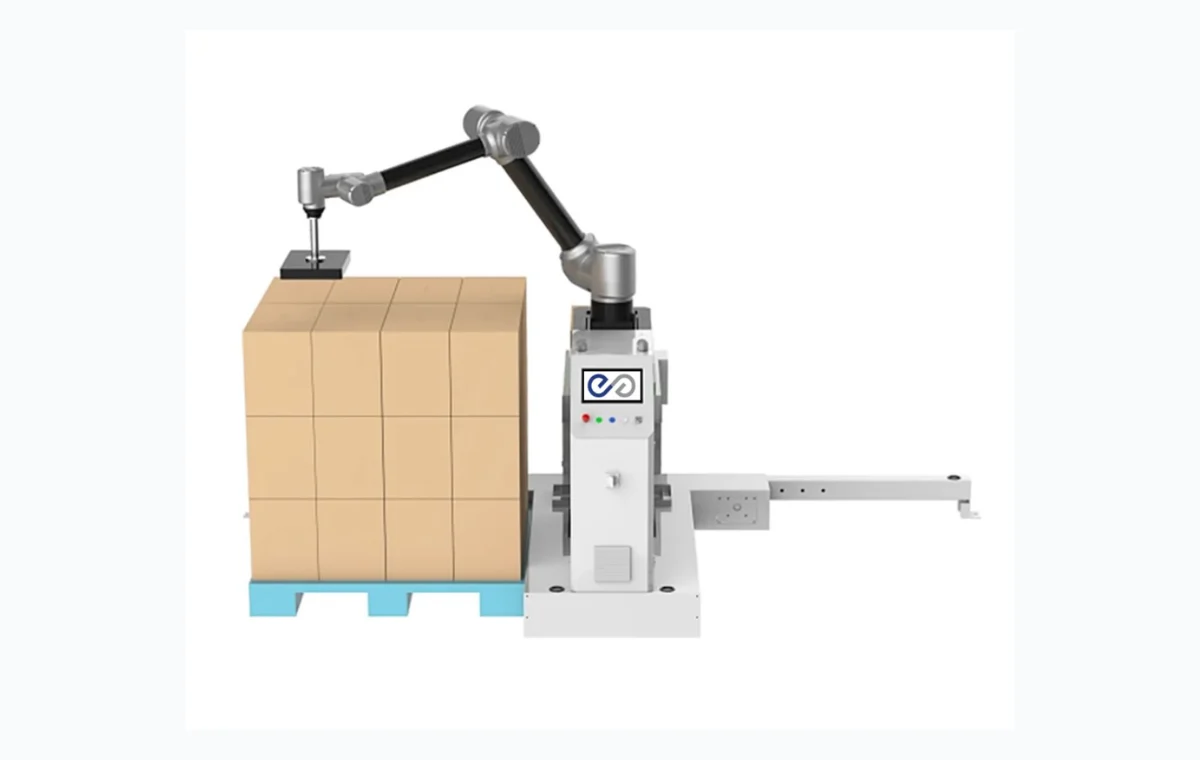
Palletizing and carton stacking
Palletizing is one of the clearest applications for a cobot. The system can follow a planned stacking pattern, build each layer consistently, and connect with the next stage of storage or transport. This is especially useful when carton handling is repetitive and the product flow is stable.
Pick-and-place work around packaging machines
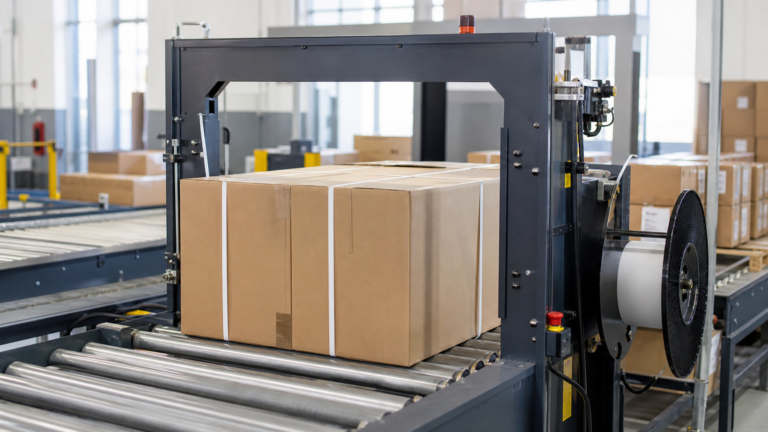
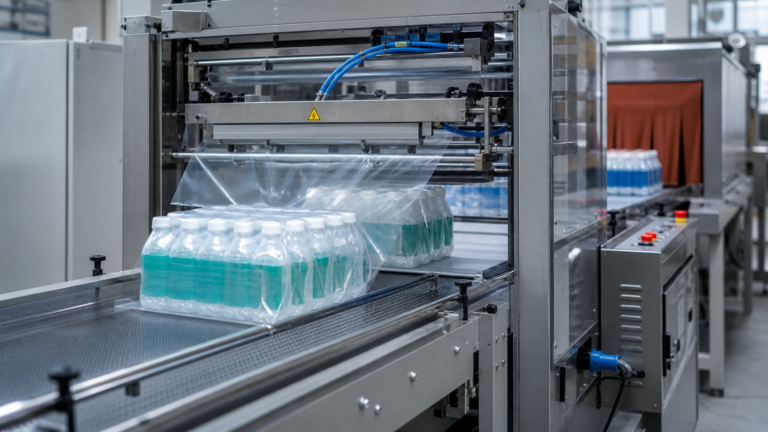
A cobot can work with packaging machinery such as carton erectors, carton sealers, wrapping systems, conveyors, and feeding equipment. The right setup depends on product size, packaging format, pickup position, and how the machine communicates with the rest of the line.
What to Consider Before Choosing a Cobot
Selecting a cobot should begin with the real task, not only with the robot model. The final performance depends on the robot arm, gripper, product presentation, conveyor timing, machine signals, and the layout of the work area.
Payload and reach
Product weight, carton dimensions, gripper weight, and travel distance determine the payload and reach required. If the product range varies, the selected system should allow enough margin for stable handling across different sizes.
Cycle time and line rhythm
A cobot should match the practical rhythm of the line. The cycle time includes picking, moving, placing, waiting for the next item, and coordinating with upstream or downstream machines. A realistic cycle-time review is essential before installation.
Integration with existing systems
When a cobot works with conveyors, sensors, PLCs, or packaging machines, the integration plan matters as much as the robot itself. For factories that need several machines to work together, an integrated system approach helps align equipment, signals, and production flow.
Information to prepare before a system review
- Product type, carton size, product weight, and packaging format
- Target output per hour or per shift
- Pickup point, placement point, and available floor space
- Existing conveyors, packaging machines, sensors, or PLC signals
How to Start Planning a Cobot System
The best starting point is a task that is repeatable, easy to observe, and connected to a clear production objective. After that, the factory can review the robot position, gripper type, product flow, safety arrangement, and machine communication step by step.
Start with one well-defined process
Instead of automating several tasks at the same time, many factories begin with one workstation. This makes it easier to evaluate cycle time, product handling, operator workflow, and overall line stability.
Plan for future expansion
Even when the first project is small, the layout should allow future improvement. If additional conveyors, carton sealers, inspection points, or pallet handling equipment may be added later, the first installation should leave room for structured expansion.
Plan Your Cobot System with Newgate Machine
If your factory is considering a cobot for palletizing, pick-and-place work, or integration with existing packaging machinery, Newgate Machine can help review the process, installation area, product flow, and suitable equipment configuration.
Summary
A cobot is a collaborative robot designed to support structured, repetitive work in a factory environment. For medium-sized factories, it offers a practical way to introduce automation into packaging, carton handling, palletizing, and other focused processes. The best results come from choosing a task carefully, reviewing the real production layout, and planning the system around the full workflow.