

What Is a Cartoning Machine?
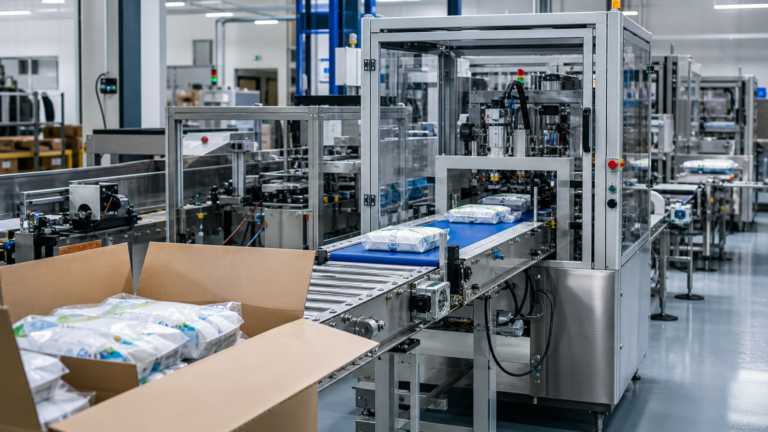
A cartoning machine is packaging equipment designed to place products into paper cartons or folding boxes in a controlled and repeatable process. It is commonly used in factories that need carton packaging to be consistent in shape, position and closing quality.
The machine can support different product categories, including food, pharmaceuticals, cosmetics, consumer goods, healthcare products and industrial items. Its main purpose is not only to put a product into a box, but also to help the packaging line move in a stable sequence from product feeding to carton closing.
Why Factories Use Cartoning Equipment
Factories use cartoning equipment when carton packing needs to follow a clear rhythm. The machine helps align product feeding, carton handling and transfer to downstream processes such as coding, inspection, sealing, bundling or case packing.
How a Cartoning Machine Works
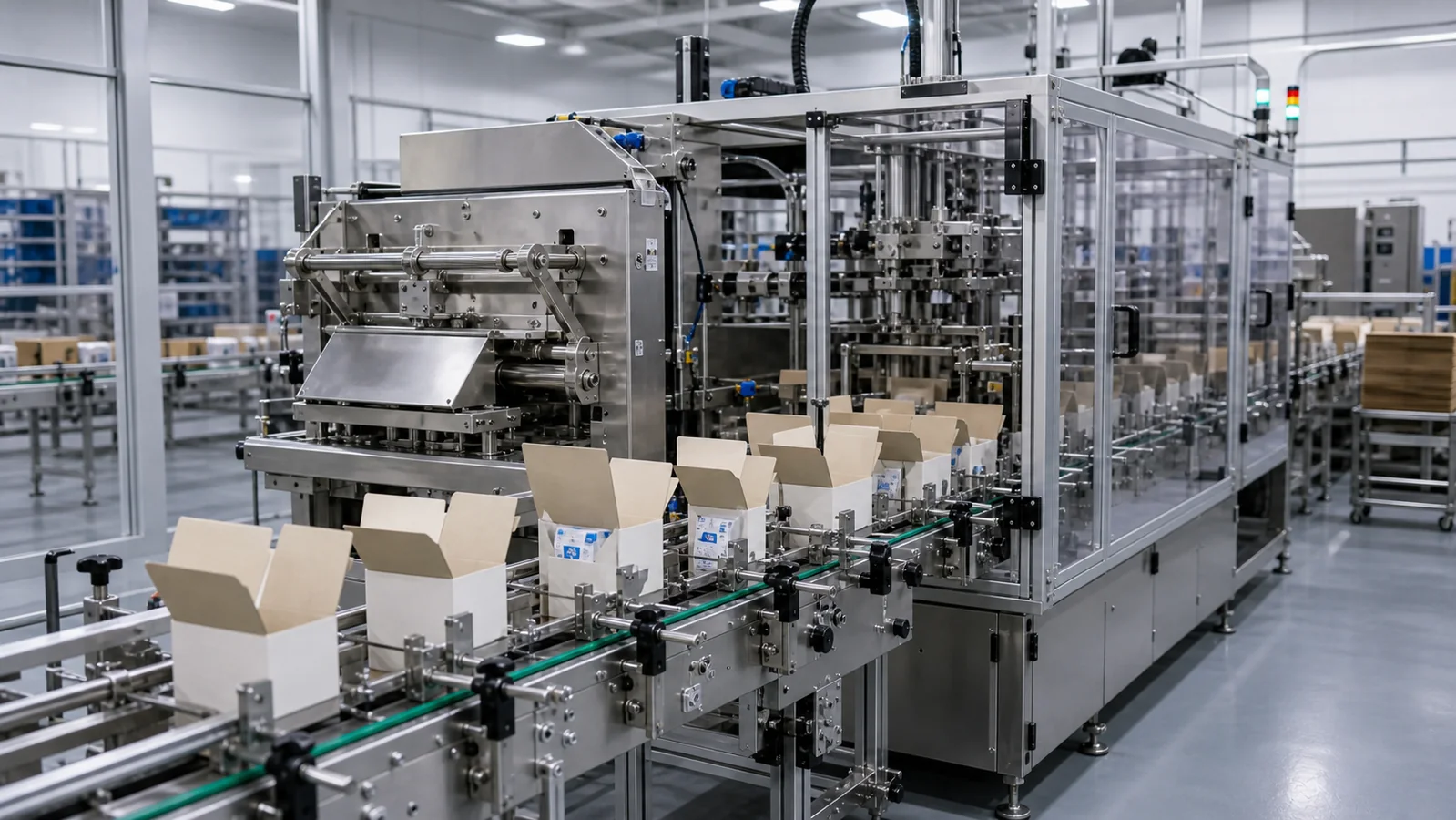
Although each production line may be designed differently, a cartoning machine usually works through a sequence of carton preparation, product feeding, product insertion, carton closing and discharge to the next process.
Main Working Steps
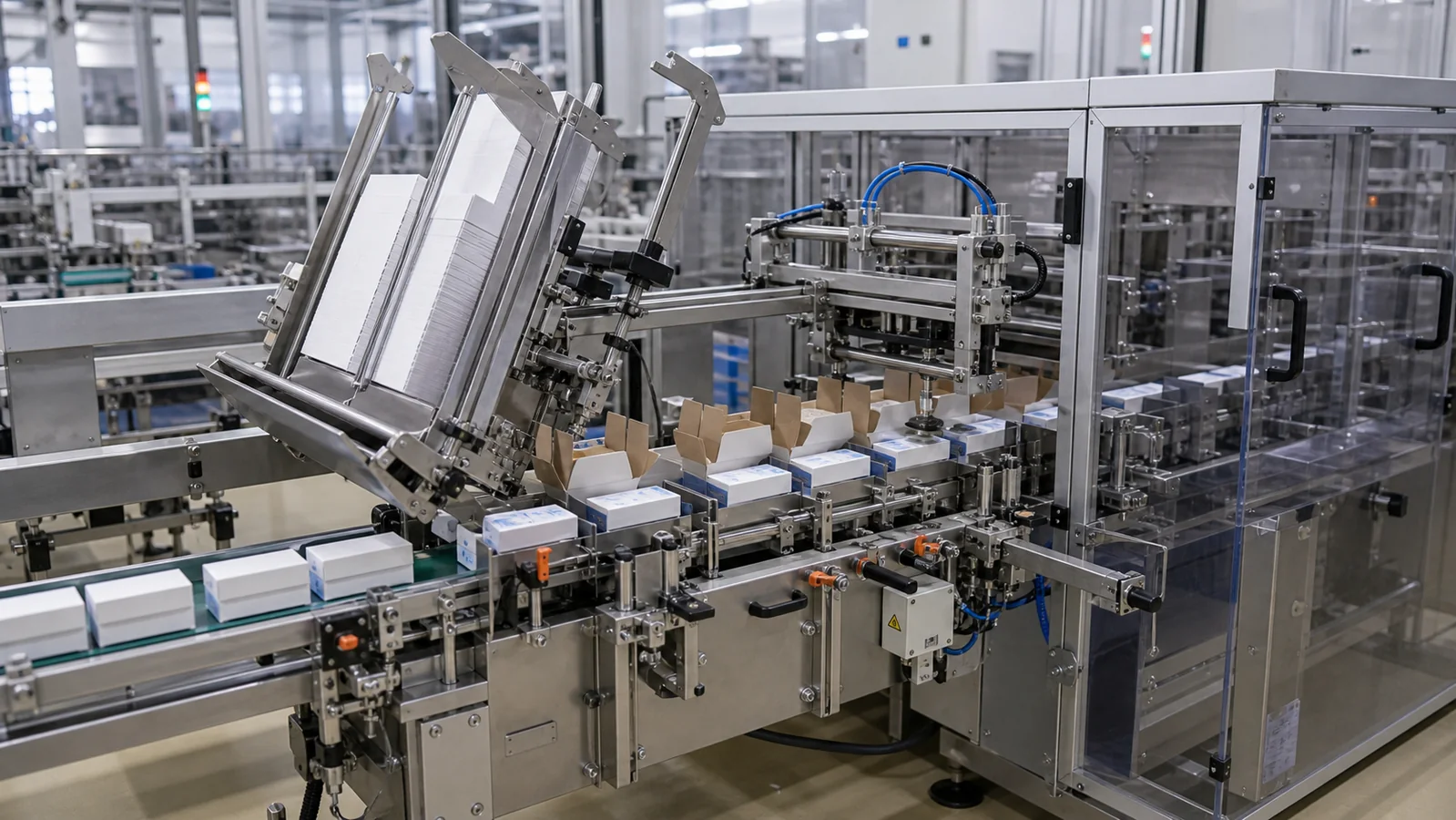
- Cartons are supplied from a carton magazine or carton feeding area.
- The carton is opened or formed into the correct packing shape.
- The product is fed into the carton by manual, semi-automatic or automatic infeed.
- The carton is closed by tuck, glue or another closing method according to carton design.
- The finished carton moves to downstream equipment for coding, inspection, sealing or packing.
The Role of Product Infeed
The infeed method is one of the most important design points. A stable infeed helps the machine handle products smoothly and keeps carton filling aligned with the production speed.
Common Product Infeed Styles
Depending on product format, the line may use manual loading, conveyor infeed, feeder integration, pick-and-place equipment or a custom handling unit.
Types of Cartoning Machines
The right type depends on how the product enters the carton, how the carton is positioned and how the production line is arranged. In many factories, the choice begins with horizontal or vertical cartoning.
Horizontal Cartoning Machine
A horizontal cartoning machine is suitable for products that can be pushed or inserted sideways into a carton. This format is often used for products packed in trays, pouches, tubes, blister packs, sachets or grouped items. It is also suitable when the product needs a clear infeed direction before closing.
Vertical Cartoning Machine
A vertical cartoning machine is suitable when products are loaded from the top into an upright carton. This format can be useful for bottles, jars, pouches, small containers or items that are more practical to drop or place vertically.
Carton Erector and Related Equipment
Some production lines require carton forming before the product packing step. In that case, an automatic carton erector or carton forming equipment may be part of the overall packaging line.
How to Select the Right Cartoning Machine for Your Factory
Selection should begin with actual production conditions rather than machine appearance alone. A suitable machine should match the product, carton, operating speed, installation space and the surrounding equipment in the line.
Key Factors to Review
- Product size, weight, shape and handling stability
- Carton dimensions, carton material and closing method
- Required production speed and daily operating hours
- Manual, semi-automatic or automatic product feeding requirement
- Available installation space and maintenance access
- Connection with upstream and downstream machines
- Future product range or capacity expansion plan
Do Not Separate the Machine from the Line
A cartoning machine performs best when it is planned together with product feeding, carton supply, coding, inspection and discharge. Reviewing the whole line helps the factory select a machine that can be installed and operated with fewer layout adjustments.
Information to Prepare Before Consultation
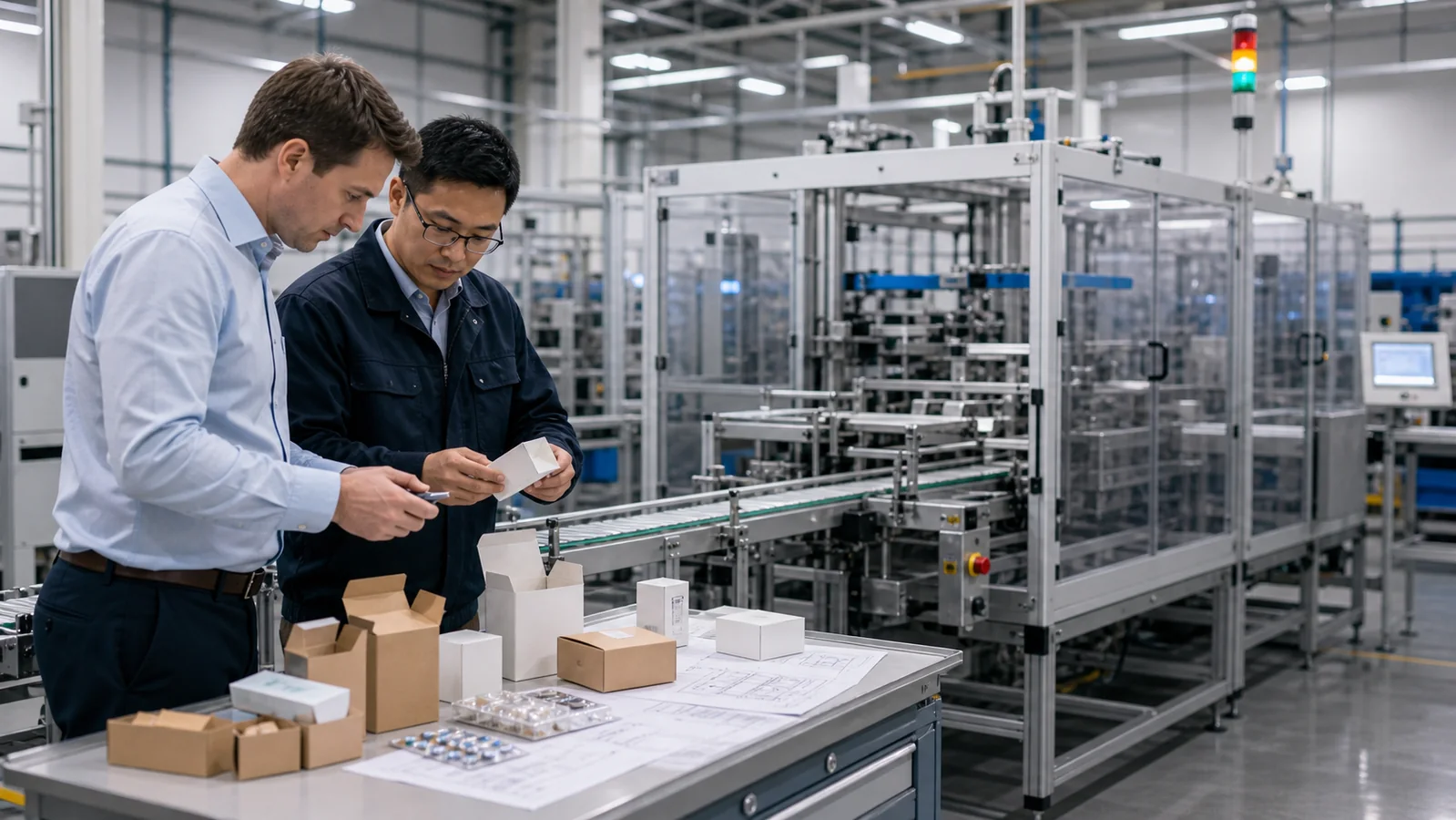
Useful information includes product samples, carton drawings, target speed, available floor plan, current line photos and details of equipment that must connect before or after the cartoning process.
Factory Preparation Checklist
Before confirming a cartoning machine specification, factories should prepare clear operating information. This helps the machinery team design the correct configuration and reduce uncertainty during installation.
- Confirm all carton sizes and product variants that will run on the machine.
- Check whether products are stable enough for automatic feeding.
- Define carton closing requirements, such as tuck, glue or tape.
- Review whether coding, labeling or inspection is required after cartoning.
- Reserve space for operators, maintenance access and carton loading.
- Plan how finished cartons will move to the next process.
Work With a Machinery Team That Understands Factory Layout
A well-selected cartoning machine should fit the product, carton and production line as one system. Newgate Machine supports factories with machinery consultation, layout planning, machine selection and integration with existing packaging processes.
If your factory is reviewing carton packaging equipment, Newgate Machine can help evaluate product samples, carton format, required output and available space before recommending a suitable machine configuration.