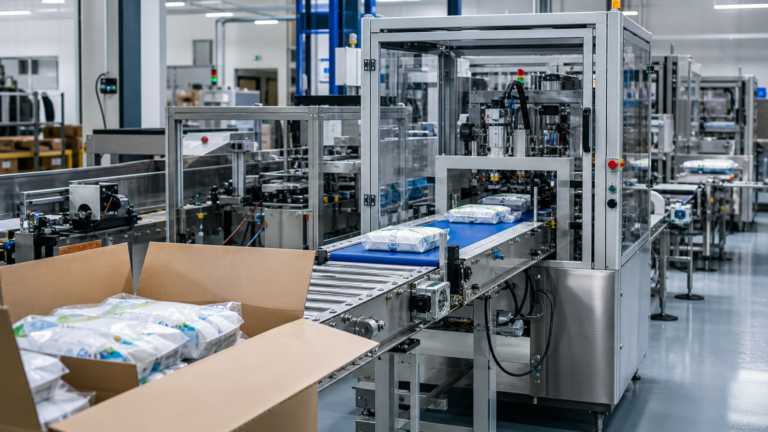


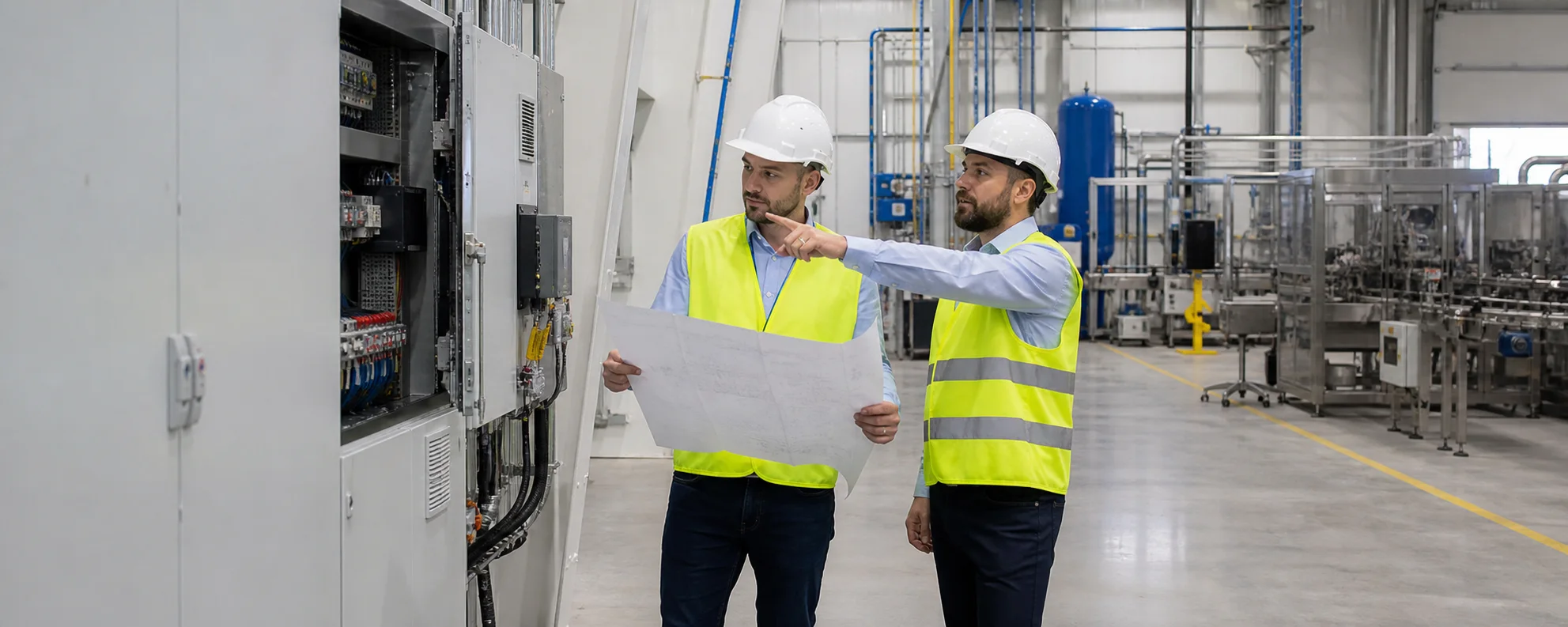
Packaging machinery installation planning works best when the factory reviews utilities, access and commissioning needs before equipment arrives. Successful equipment installation begins before the machine arrives. Electrical supply, compressed air, floor condition, access routes, safety clearance, drainage, extraction and material flow all influence the time required for installation and commissioning.
Early utility planning also makes it easier to integrate the new equipment with an existing production and packaging system.
Confirm Electrical and Control Requirements
Review supply voltage, frequency, load, isolation points, grounding, panel location and communication requirements. The final installation should follow local regulations and the equipment documentation.
Prepare Compressed Air and Other Utilities
Where pneumatic equipment is used, confirm pressure, air quality, consumption and connection location. Consider any required vacuum, cooling water, extraction or cleaning utilities as part of the complete scope.
Make the Requirement Measurable
Use a measurable condition that operators, engineers and commercial teams can review together. complete project investment can be included where equipment interfaces or wider line coordination affect the outcome.
Check the Floor and Environment
Floor load, level, vibration, lighting, temperature, dust and cleaning conditions may affect machine setup and long-term operation.
Keep Drawings Current
Layout, utility and control drawings should be updated when the installation changes so that service and future expansion remain manageable.
Plan Space for Operation and Maintenance
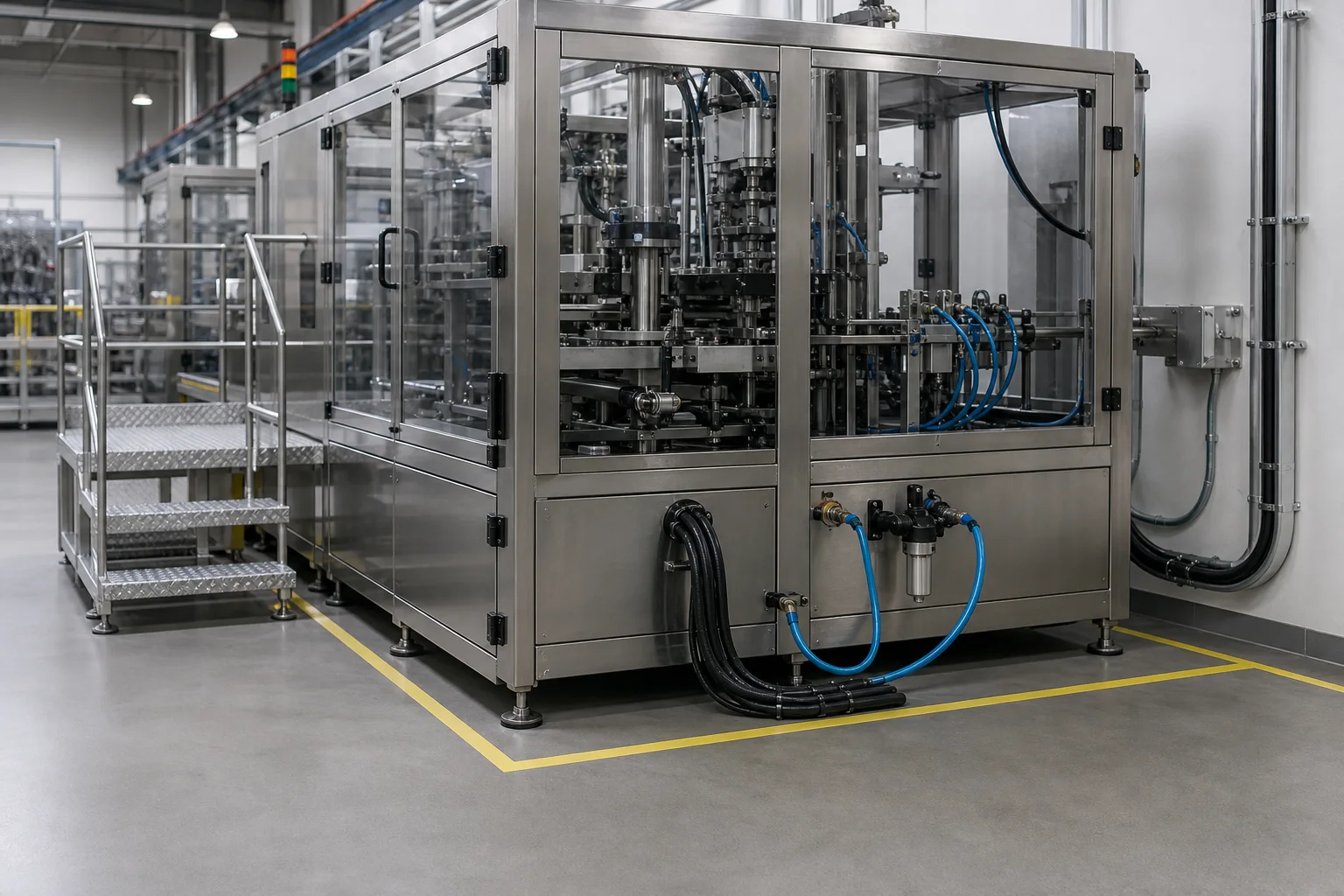
The machine footprint is only one part of the layout. Allow room for material loading, operator movement, guard opening, service access, format-part storage, waste removal and safe emergency routes.
Design the Installation Sequence
Define delivery route, unloading method, installation access, utility connection, dry run, product trial and acceptance steps. A clear sequence reduces conflicting work and helps the factory plan its production schedule.
Utilities Readiness Before Machine Delivery
Packaging machinery installation is smoother when utilities are confirmed before the machine arrives. Electrical supply, compressed air, network connection, drainage, exhaust, floor condition and access route should be reviewed with the actual machine layout. This prevents installation work from becoming a series of last-minute corrections on the production floor.
The review should include both the machine requirement and the factory condition. A machine may require a specific voltage, breaker capacity, air pressure, air quality or grounding arrangement. The factory team should confirm that these utilities are available at the correct location and that the connection method meets local safety practice.
Plan Access, Clearance and Operator Movement
Installation planning should include more than the machine footprint. Operators need working space, maintenance teams need access to service points, and materials must move in and out of the area without interrupting the line. Clearance for doors, panels, conveyors and guarding should be checked before final placement.
The route into the factory is also important. Door width, floor level, lifting equipment and temporary storage space can affect delivery. Confirming these details early helps the installation team prepare the correct equipment and reduces the chance of delay during machine positioning.
Prepare for Commissioning and Handover
Before commissioning, confirm utilities, materials, product samples, operators and acceptance criteria. This allows the installation team to test the packaging machinery under realistic conditions and complete handover with clear operating information.
Commissioning Records for Installation Projects
Packaging machinery installation should finish with clear commissioning records. These records may include utility confirmation, safety checks, machine settings, product samples, trial output, training notes and open items. They provide a practical reference after the installation team leaves the site.
Commissioning should also confirm that operators can run the machine under normal conditions. This includes start-up, stop, adjustment, cleaning, changeover and response to common alarms. A successful installation is not only a machine placed on the floor, but a process that the factory can operate confidently.
Use Handover Notes for Future Support
Good records make future service and improvement work easier. They also help the factory review packaging machinery installation results using clear evidence rather than memory.
Practical Steps for Implementation
A practical improvement program is easier to sustain when the intended result, current state and verification method are agreed before changes are made.
- Review equipment utility data and site conditions.
- Create a layout including operating and maintenance access.
- Confirm delivery, installation and commissioning responsibilities.
- Validate connections and safety functions before product trials.
Frequently Asked Questions
When should utility planning begin?
Begin during equipment selection so that site requirements can be included in the project scope and schedule.
Why is maintenance access important in the layout?
Restricted access can increase service time and make routine checks less practical after installation.
Can utilities be added after the machine arrives?
Sometimes, but late changes can delay commissioning and create avoidable disruption.
Prepare Your Packaging Machinery Installation
Newgate Machine can review layout, utility requirements and equipment interfaces before installation and commissioning.