

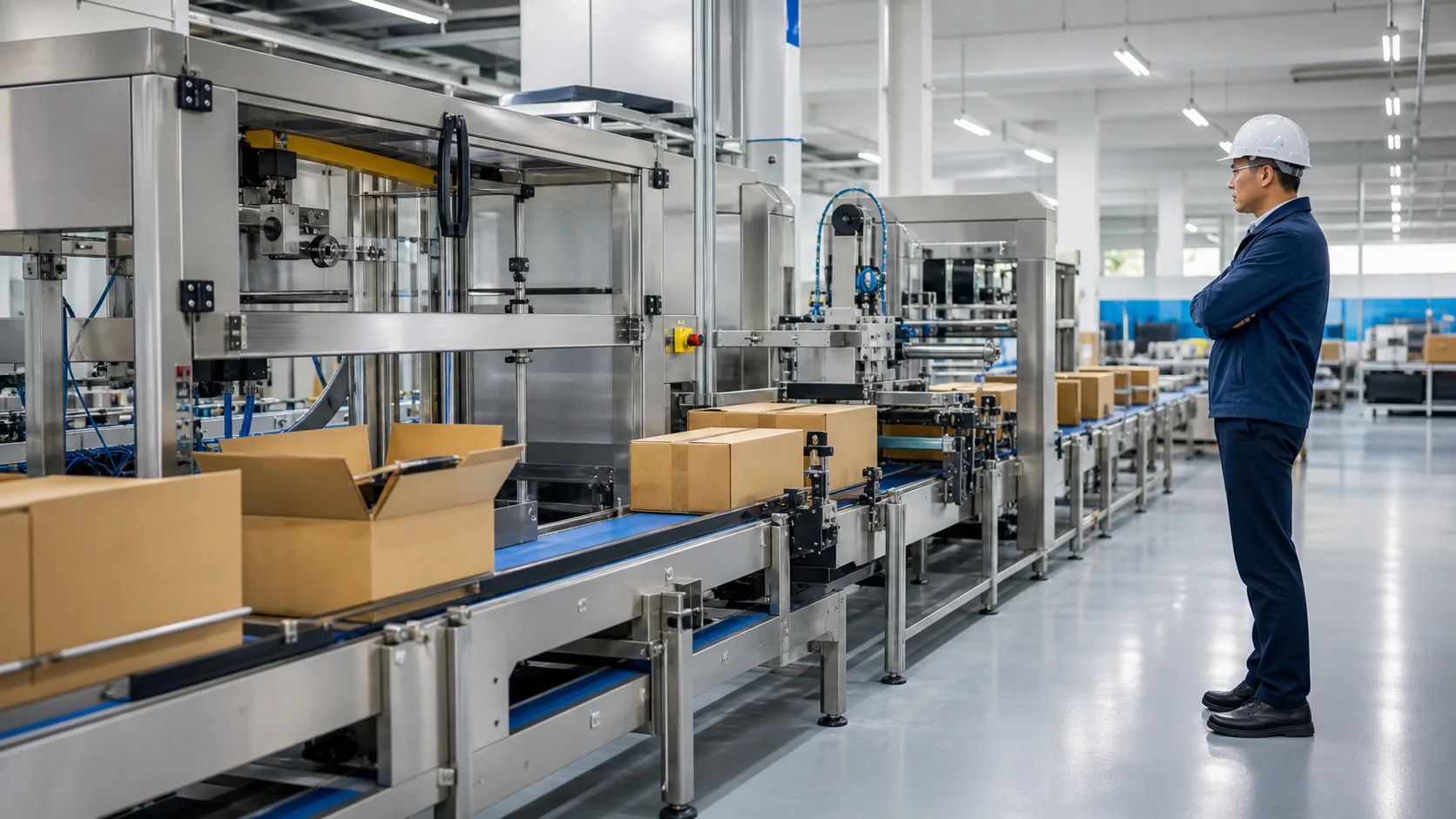
Packaging machinery should be selected as part of the full production process, not only as an individual machine purchase. Packaging is the point at which a finished product becomes ready for storage, transport and presentation. In a modern factory, that stage is rarely a single machine. It is a sequence of measured actions: feeding, forming, filling, wrapping, coding, sealing, checking and preparing each unit for the next destination.
Well-planned packaging machinery gives this sequence a consistent rhythm. The correct arrangement depends on the product, packaging material, required output, available floor space and the way upstream and downstream equipment communicate. This guide explains the main machine groups, practical selection criteria and the planning principles that help a packaging line remain effective over time.
What Packaging Machinery Includes
Packaging machinery is the collective term for equipment that prepares products for protection, identification, grouping, handling and distribution. The scope can begin with a compact semi-automatic station or extend to a complete automated line with conveyors, sensors, inspection devices and production controls.
Primary, Secondary and Tertiary Packaging
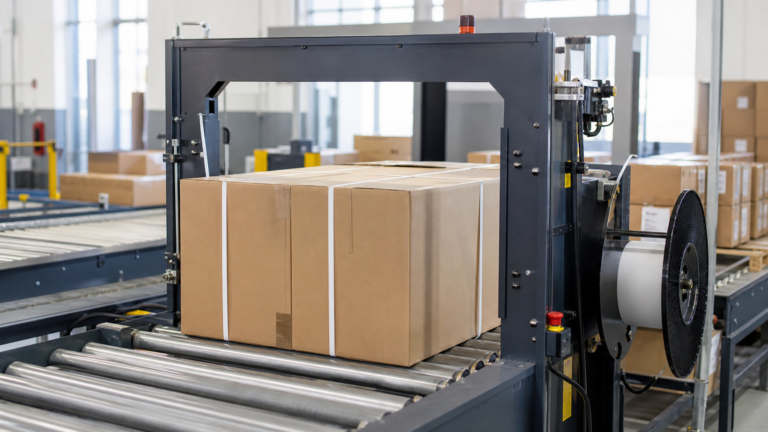
The first useful distinction is the packaging level. Primary packaging is in direct contact with the product, such as a pouch, tray or bottle. Secondary packaging groups or protects one or more primary packs, often in a carton or shrink bundle. Tertiary packaging prepares larger groups for warehousing and transport, commonly through case sealing, strapping or palletizing.
A factory may require equipment at one level or all three. Defining the packaging level first makes it easier to compare machine functions and avoid evaluating unrelated systems under the same specification.
Core Packaging Machine Groups in a Factory
Machine names vary by industry, but most packaging lines are assembled from a familiar set of functions. Understanding these functions provides a practical basis for initial planning.
Forming, Filling and Wrapping Equipment
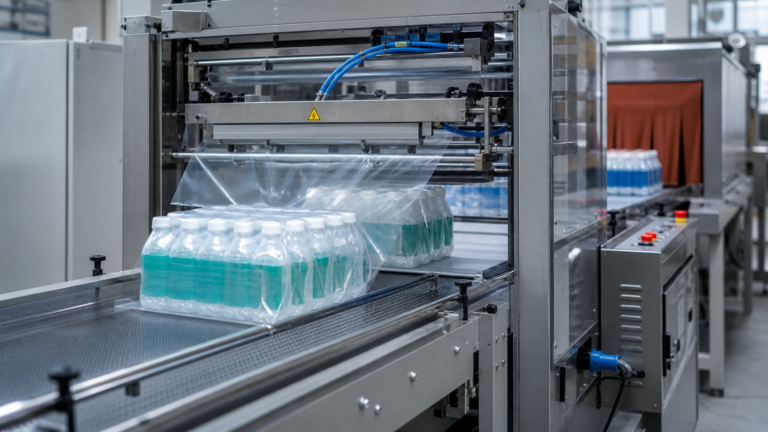
Forming equipment creates a pack from film, carton blanks or other flat materials. Filling equipment meters the product into a container or pouch. Wrapping equipment encloses individual products or grouped items in flexible film. Depending on the application, one machine may combine several of these operations.
Horizontal flow pack systems are commonly considered for products that can travel in a stable orientation on a conveyor. Vertical filling systems are suited to products that can be dosed downward into formed bags. Shrink wrapping is often selected when products need visible grouping or an additional protective layer. The detailed comparison in the flow pack, shrink wrap and vacuum pack guide can support an early review of these formats.
Cartoning and Case-Handling Equipment
Cartoning machines open, load and close retail or secondary cartons. Horizontal models generally load products from the side, while vertical models load from above. Product shape, loading method, carton construction and the need for leaflet insertion all influence the appropriate configuration.
Carton Erectors and Carton Sealers
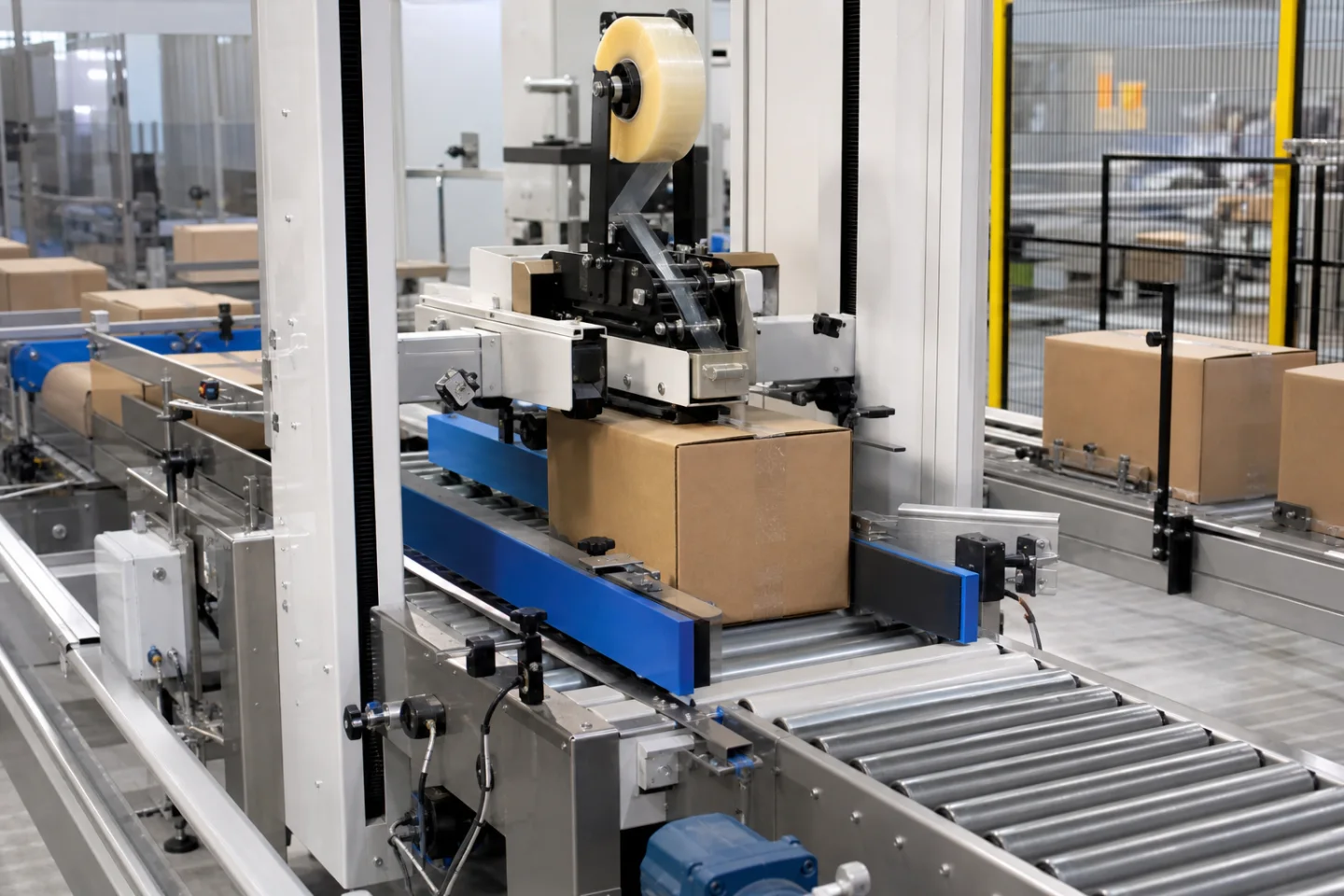
Further along the line, a carton erector forms corrugated cases and prepares them for loading. A carton sealer then closes the filled case with tape or another specified method. These machines can operate independently or connect to conveyors and upstream packing stations.
Details That Affect Sealing Quality
Carton dimensions, board condition, flap alignment, tape specification and conveyor guidance all contribute to a stable sealing result. A machine should therefore be reviewed with actual carton samples rather than nominal dimensions alone.
Coding, Inspection and End-of-Line Systems
Coding systems apply dates, batch information, barcodes or traceability data. Inspection devices can confirm weight, presence, position or code quality before a product proceeds. At the end of the line, banding, strapping and palletizing equipment prepare finished packs for controlled handling and transport.
For a broader overview of these equipment families, see the article on types of packaging machines for factories.
How to Select Suitable Packaging Machinery
The most useful specification begins with the product and process, not with a catalogue speed. A clear technical review should document the following points before equipment is shortlisted.
| Review Area | Information to Confirm | Why It Matters |
|---|---|---|
| Product | Dimensions, weight, surface, orientation and handling limits | Determines feeding, guiding and transfer design |
| Packaging material | Film, carton, tray, pouch, case, tape or strap specification | Affects forming, sealing and compatibility |
| Output | Normal rate, peak rate, shift pattern and changeover frequency | Supports realistic capacity planning |
| Factory layout | Floor space, access, utilities and product flow direction | Guides equipment placement and service access |
| Integration | Signals, conveyor heights, accumulation and line controls | Allows machines to operate as one process |
Use Representative Samples During Evaluation
Product drawings are valuable, but representative samples reveal characteristics that drawings cannot fully describe. Flexible packs may shift shape, cartons may vary slightly by supplier or humidity, and product surfaces may respond differently to guides and belts. Testing samples across the expected size range gives the engineering team a more reliable basis for acceptance criteria.
Evaluate Changeovers as Part of Production
Where several products share one machine, changeover method is as important as nominal speed. Adjustment points should be accessible, repeatable and clearly identified. Format parts, recipes and inspection settings should also be included in the operating plan.
Planning an Integrated Packaging Line
A line performs according to the relationship between its machines. Conveyor speed, buffer capacity, sensor position and control logic determine whether each process receives products at a manageable rate. The objective is not simply to connect equipment physically, but to establish a coordinated operating sequence.
Balance the Process Around Actual Throughput
The fastest machine does not automatically define useful line output. Upstream supply, inspection time, carton handling and downstream accumulation can influence the sustained rate. Capacity should be assessed at line level, including normal stops and product changeovers.
Controls and Communication
Start, stop, ready, fault and product-present signals help individual machines coordinate safely. For more advanced systems, recipes, counters and operating data can be shared through the agreed control architecture. A clear interface list reduces uncertainty during installation and commissioning.
Allow Space for Operation and Service
A compact layout should still provide room for loading materials, clearing products, opening guards, replacing consumables and carrying out maintenance. These access requirements belong in the first layout review, not only at the installation stage.
Factories considering several connected processes can review Newgate Machine’s integrated packaging system capabilities for line planning, equipment connection and program coordination.
Maintenance Planning and Future Expansion
Routine inspection, cleaning and replacement schedules help machinery retain its intended accuracy and availability. The maintenance plan should identify critical wear parts, recommended spares, lubrication points, sensor checks and the records required for recurring work.
Prepare the Operating Team
Operators should understand normal machine states, material loading, changeovers and the correct response to alarms. Maintenance personnel need access to electrical and mechanical documentation, spare-part references and safe troubleshooting procedures. Training is most effective when it uses the factory’s actual products and operating conditions.
Design with Reasonable Expansion in Mind
A line may later require a new product size, coding method, inspection step or automated handling station. Reasonable allowances in conveyor layout, controls and utilities can make future changes more orderly. Expansion planning should remain practical, based on known production direction rather than unnecessary complexity.
Frequently Asked Questions
What is the difference between a packaging machine and a packaging line?
A packaging machine performs a defined operation, such as wrapping or carton sealing. A packaging line combines multiple machines, conveyors and controls into a coordinated process.
Should machine capacity be higher than the current production rate?
A suitable allowance can support normal variation and planned growth, but capacity should be evaluated with the complete process. Excess machine speed offers limited value when feeding, inspection or downstream handling cannot support it.
Can new packaging equipment connect to an existing production line?
In many cases it can. The review should confirm product transfer, conveyor levels, available space, utilities, safety requirements and control interfaces before the final layout and specification are approved.
Plan Your Packaging Process with Newgate Machine
Newgate Machine supports factories in reviewing packaging requirements, selecting suitable machinery and coordinating equipment with existing production processes. A discussion based on product samples, packaging formats, target output and factory layout provides a clear starting point for technical planning.