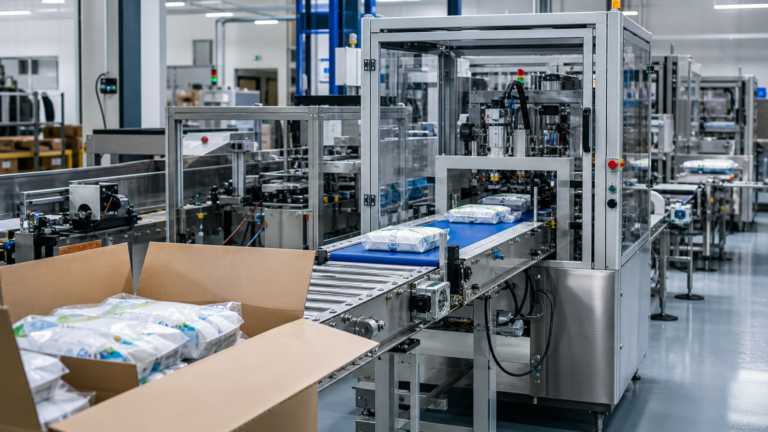


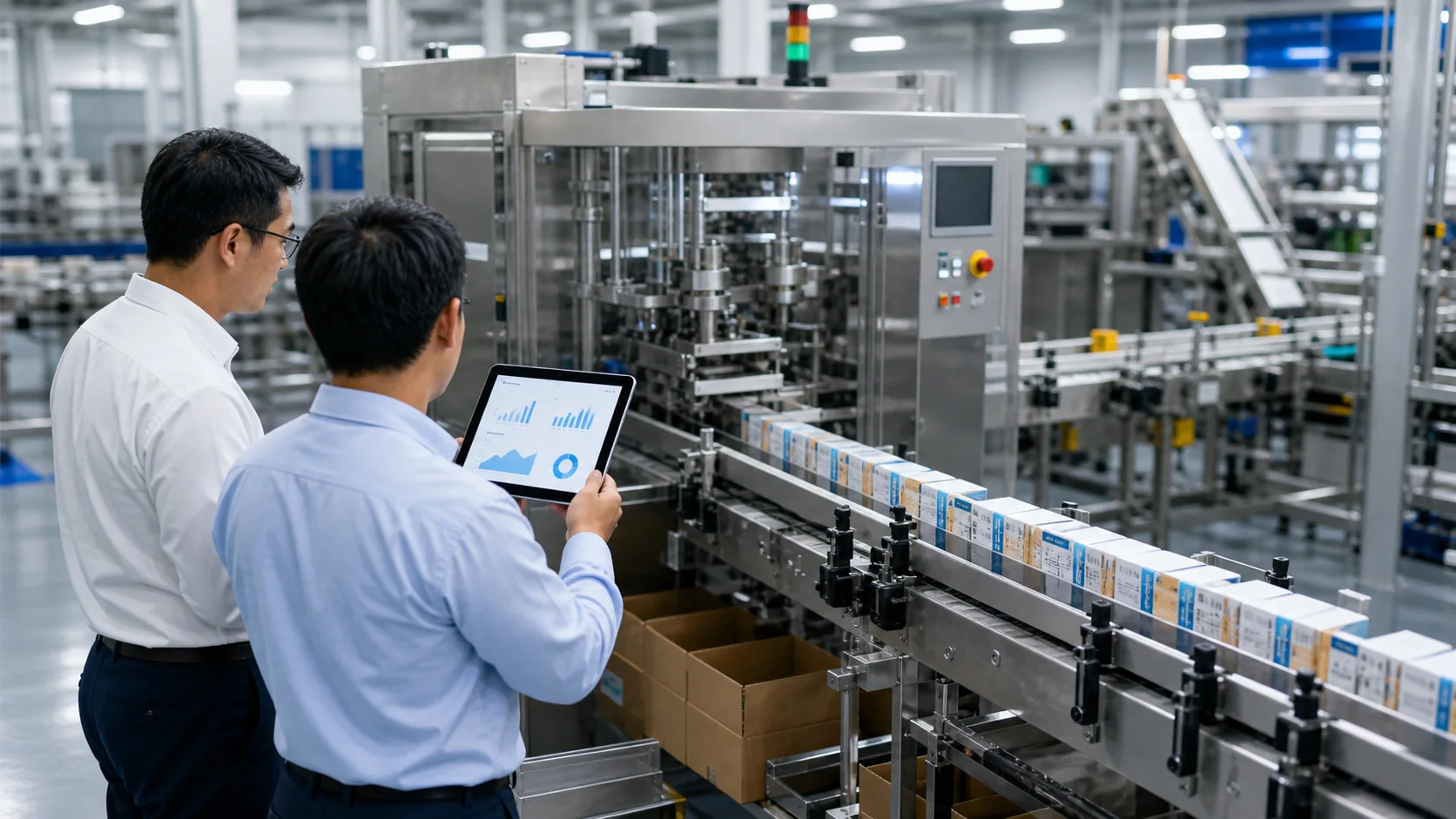
Packaging machinery ROI should be calculated with practical production data, including investment, labor, output, waste and operating cost. A packaging machine is a productive asset, but its purchase price alone does not show whether the investment is commercially suitable. The decision becomes clearer when the factory compares the complete project cost with the annual value created through labor allocation, higher output, lower material loss, consistent quality and more reliable production.
Return on investment and payback period provide two practical views of the same proposal. ROI expresses the annual net benefit as a percentage of the investment, while payback estimates how long it takes for accumulated benefits to recover the initial expenditure. This guide explains how to calculate both measures for packaging machinery using factory data rather than assumptions from a catalogue.
ROI and Payback Fundamentals for Packaging Machinery
The two calculations are related, but they answer different management questions. Payback is usually easier to communicate because it expresses the result in months or years. ROI is useful when comparing projects of different sizes or presenting the expected annual return relative to the capital employed.
Simple Annual ROI Formula
Annual ROI (%) = Annual net financial benefit ÷ Total initial investment × 100
For an equipment proposal, annual net financial benefit is the value of verified savings and additional contribution generated in one year, less the additional annual costs required to operate and maintain the new system.
Simple Payback Period Formula
Payback period (months) = Total initial investment ÷ Annual net financial benefit × 12
The simple formula assumes that benefits are received evenly throughout the year. When production is seasonal, capacity ramps up gradually or savings vary by month, a monthly cash-flow schedule gives a more accurate result.
Calculate the Total Packaging Machinery Investment
A reliable calculation starts with the installed project cost, not only the machine quotation. Depending on the scope, the initial investment may include the following items:
- Packaging machine, conveyors, feeders, guarding and format parts
- Coding, inspection, rejection and production-control equipment
- Robotic handling, case packing, sealing or palletizing equipment
- Freight, duties, insurance and delivery to the factory
- Installation, commissioning and site acceptance testing
- Electrical supply, compressed air, extraction and civil modifications
- Training, documentation and initial spare parts
- Internal engineering time and planned production interruption
Separate Capital Cost from Recurring Cost
The purchase and installation normally form the initial capital requirement. Electricity, compressed air, routine parts, software subscriptions and scheduled service are recurring operating costs. Keeping the two groups separate prevents annual expenses from being overlooked when calculating the net benefit.
Include Interfaces Between Machines
A project involving several machines may require conveyor modifications, line controls, safety integration and common operating logic. These items are part of the productive system and should be included from the beginning. An integrated packaging system review can clarify the interfaces before the investment figure is approved.
Allow for an Appropriate Contingency
Where the final layout or utility work is still being defined, the proposal may include a clearly identified contingency. It should reflect the maturity of the project rather than being used as an arbitrary percentage. Once supplier scope and site requirements are confirmed, the allowance can be refined.
Measure the Annual Financial Benefits
Benefits should be calculated from the factory’s current operating records and the proposed future method. Each item needs a baseline, an expected improvement, an annual production volume and a financial value.
Labor Allocation and Overtime
Automation may reduce the number of manual packing positions required per shift or allow employees to move to inspection, material preparation and other productive work. Financial treatment should follow the company’s actual plan. A reassigned employee does not automatically represent a cash saving, although the released capacity may still have measurable value by avoiding future recruitment or overtime.
Additional Saleable Output
Higher line speed creates financial value only when the factory can produce and sell additional units, reduce an existing backlog or avoid external production costs. The benefit should therefore use contribution margin, not total sales revenue. Contribution margin generally means selling price less the variable costs directly associated with the extra volume.
Material Waste and Product Giveaway
Better film control, accurate counting, stable sealing and automated rejection can reduce packaging material waste or incorrect packs. Compare the current scrap rate with a conservative future rate and multiply the difference by annual material usage and landed material cost.
Quality, Rework and Customer Returns
Coding errors, incomplete packs, damaged cartons and inconsistent closure can create inspection, rework and disposal costs. Use documented incidents and avoid assigning a financial value to quality improvements that cannot be traced to the proposed equipment.
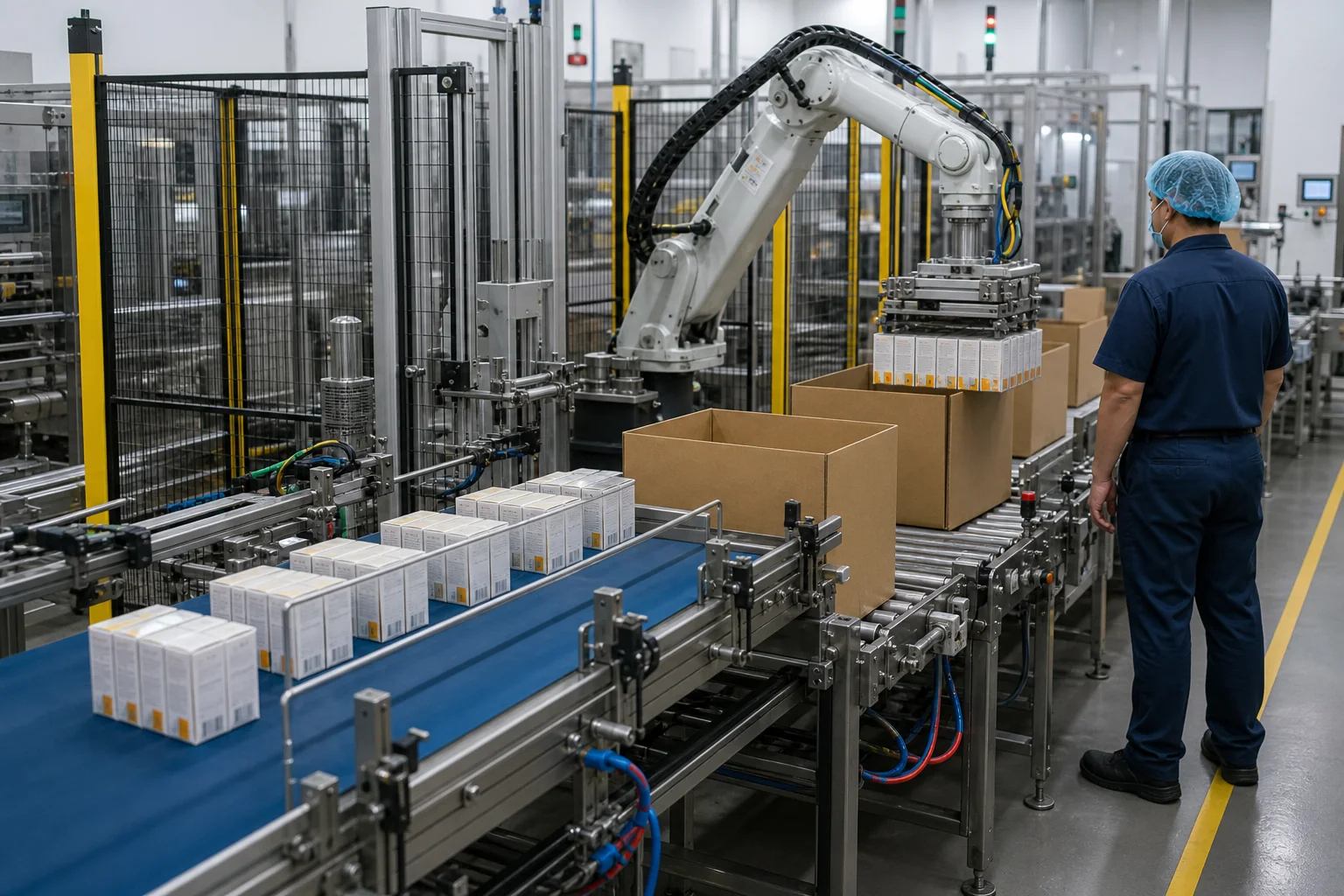
Downtime and Production Availability
Reliable equipment, faster changeovers and controlled product flow can increase available production time. The value must be based on the line constraint. Saving ten minutes on a non-critical machine has limited financial effect if another process continues to restrict total output.
Worked Example: Packaging Machinery ROI and Payback
Consider a factory evaluating an automated secondary packaging and case-packing project. The values below are illustrative and should be replaced with quotations, production records and financial assumptions approved by the individual business.
| Calculation Item | Annual or Initial Value | Basis |
|---|---|---|
| Installed machinery project | THB 4,800,000 | Total initial investment |
| Labor and overtime benefit | THB 1,440,000 | Verified staffing plan across operating shifts |
| Additional contribution from output | THB 1,200,000 | Saleable additional volume at contribution margin |
| Reduced waste and rework | THB 360,000 | Documented material and quality baseline |
| Additional operating and maintenance cost | (THB 420,000) | Energy, routine parts and scheduled service |
| Annual net financial benefit | THB 2,580,000 | Total benefits less recurring costs |
Example Result
Annual ROI: THB 2,580,000 ÷ THB 4,800,000 × 100 = 53.8%
Simple payback: THB 4,800,000 ÷ THB 2,580,000 × 12 = approximately 22.3 months
This example excludes financing, tax, depreciation, inflation and the time value of money. Those items may be included by the finance team in a discounted cash-flow, net present value or internal rate of return analysis.
Build Credible Assumptions Before Approving the Project
An ROI calculation is only as useful as its assumptions. The strongest proposals show where each number comes from and how the result changes when operating conditions differ from the base case.
Use a Measured Current-State Baseline
Record current staffing, output, scrap, rework, changeover time, downtime and overtime over a representative period. A short observation during an unusually good production run may overstate the future benefit.
Calculate Three Scenarios
A conservative, expected and higher-performance scenario helps management understand the range of outcomes. The conservative case may use lower production volume, a slower ramp-up and higher maintenance cost. The proposal remains more credible when it does not depend on every assumption reaching its most favorable value.
Avoid Counting the Same Benefit Twice
For example, output gained from lower downtime should not also be counted as separate additional capacity if both figures represent the same extra units. Likewise, labor released through automation should not be recorded as both direct savings and avoided overtime unless the two values are supported by separate operating changes.
Confirm the Production Ramp-Up Period
Training, product validation and progressive speed increases may mean the line does not deliver a full annual benefit immediately. A monthly model can reflect installation, commissioning and ramp-up more realistically than a calculation that assumes maximum benefit from the first day.
Review Value Beyond the Simple Payback Period
Payback is helpful, but it does not measure benefits received after the investment has recovered its cost. It also does not account for the timing of cash flows. A machine with a slightly longer payback may provide greater total value over a longer useful life.
Net Present Value and Internal Rate of Return
For larger projects, finance teams may discount future cash flows using the company’s required rate of return. Net present value indicates the present value created after the investment, while internal rate of return expresses the discount rate at which the project’s net present value becomes zero.
Operational and Strategic Considerations
Some benefits are important even when they are difficult to convert directly into currency. These may include safer material handling, consistent presentation, better traceability, improved production data, additional format capability and the ability to support future volume. They should be documented separately from the financial return rather than assigned unsupported monetary values.
Factories considering robotics can also review the practical sequence in adding robots to a packaging line, including product assessment, layout, safety and integration.
Packaging Machinery Investment Review Checklist
- Define the required products, formats, output and operating shifts
- Confirm the complete installed project cost and scope exclusions
- Measure the current production baseline over a representative period
- Use contribution margin when valuing additional saleable output
- Distinguish cash savings from labor capacity that will be reassigned
- Deduct energy, maintenance, consumables and service costs
- Include commissioning and production ramp-up in the cash-flow timing
- Test conservative, expected and higher-performance scenarios
- Agree acceptance criteria before ordering the equipment
- Review financial and operational benefits separately
Frequently Asked Questions
What is a suitable payback period for packaging machinery?
There is no universal period. The suitable threshold depends on company policy, cost of capital, project risk, machine life and strategic importance. The result should be compared with the organization’s approved capital-investment criteria.
Should depreciation be included in packaging machinery ROI?
Simple operating ROI and payback calculations often focus on cash flows and exclude depreciation because it is a non-cash accounting expense. Tax and accounting evaluations may treat it differently, so the method should be agreed with the finance team.
How can a factory estimate savings before the machine is installed?
Use measured baseline data, supplier cycle studies, representative product trials and clearly documented assumptions. Factory acceptance testing can then verify sustained output, quality and changeover performance before final installation.
Review Your Packaging Investment with Newgate Machine
Newgate Machine can assist with product evaluation, equipment selection, line layout and system integration. A clear technical scope provides the operating data needed for your team to prepare a considered investment and payback assessment.