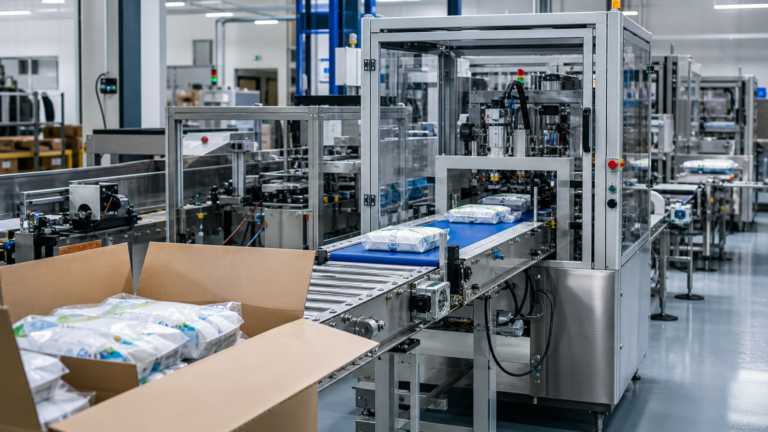


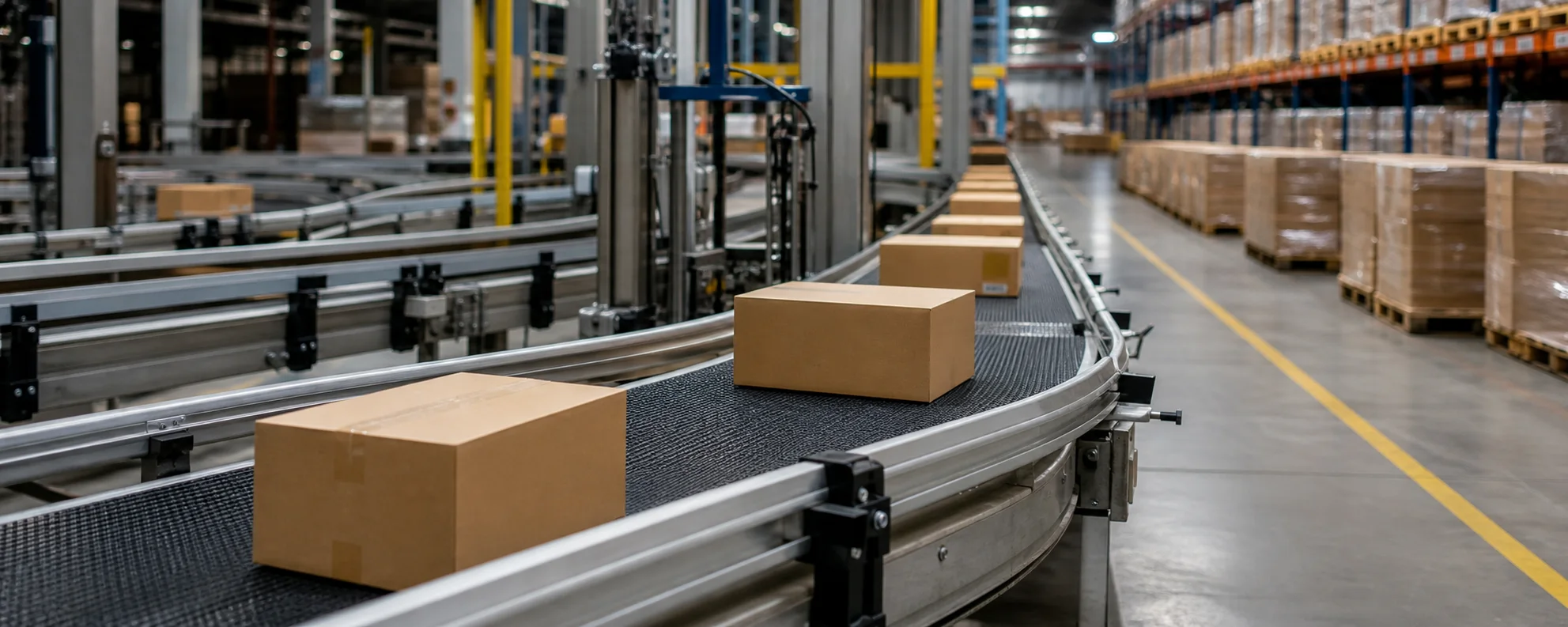
Packaging quality continues beyond the moment a pack leaves the machine. It affects handling in the factory, transport, storage, retail presentation and the customer experience. A product may be made correctly yet still create avoidable cost if the pack is damaged, incorrectly coded or difficult to handle downstream.
The complete sequence from primary pack to shipping case should therefore be reviewed as one controlled process, supported by appropriate packaging equipment.
Protect the Product at Each Packaging Level
Primary packaging protects the product itself, secondary packaging organizes saleable units, and tertiary packaging supports distribution. Each level must suit the product weight, surface, stacking requirement and expected transport condition.
Confirm the Right Information Travels With the Product
Batch, date and product information should remain legible through packaging and distribution. Print location, substrate and inspection method should be selected around the actual handling sequence.
Make the Requirement Measurable
Use a measurable condition that operators, engineers and commercial teams can review together. packaging format selection can be included where equipment interfaces or wider line coordination affect the outcome.
Review the Distribution Route
Temperature, vibration, stacking, hand transfer and delivery frequency may affect the required protection level.
Keep Quality Criteria Clear
Operators and inspectors need simple agreed definitions of an acceptable pack and case.
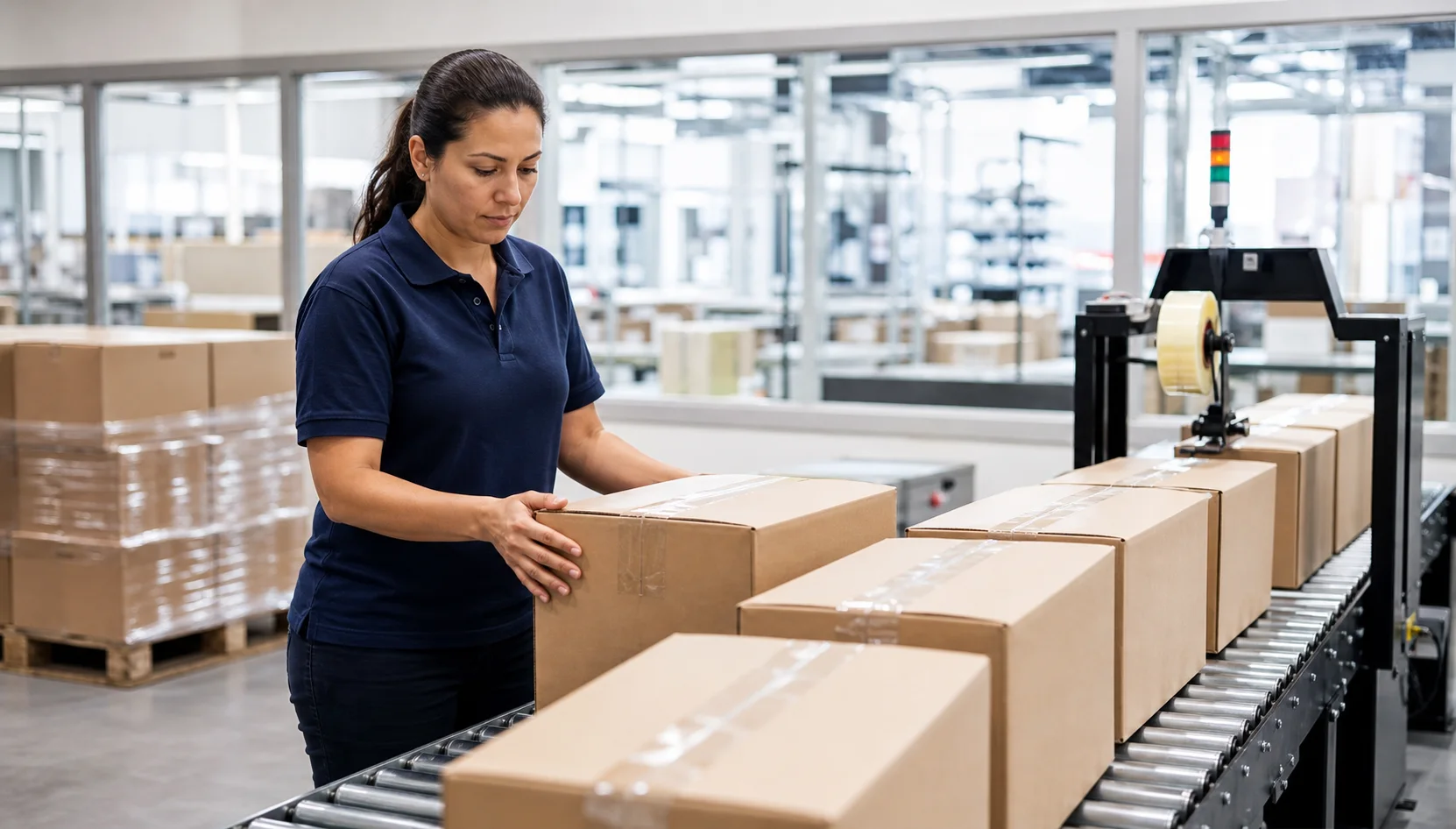
Use Case Packing to Support Distribution
A shipping case should hold the intended count, close securely and present a stable unit for storage and transport. Case dimensions, loading pattern and sealing method should be tested with the finished pack rather than considered in isolation.
Inspect Before Value Is Added Downstream
Check the most important pack conditions before loading into cases or palletizing. Removing a non-conforming pack early avoids adding more materials and handling to an item that cannot be released.
Packaging Quality Checks From Packing to Dispatch
Packaging quality is built across the full route from individual pack to dispatch. A product may leave the primary machine in good condition, but later handling, case packing or palletizing can still affect the final presentation. For this reason, quality checks should cover the full packaging flow, not only the first machine in the line.
Useful checkpoints include product count, orientation, seal condition, carton shape, date code readability, label position, case quantity and case closure. These conditions should be simple enough for operators to verify during production and specific enough for supervisors to review when a repeated issue appears.
Define What Must Be Checked Automatically
Some checks can be done manually at defined intervals, while others are better supported by sensors, code readers, checkweighers or vision inspection. The choice depends on production speed, regulatory requirement, customer specification and the cost of releasing an incorrect pack. A balanced system avoids unnecessary complexity while still protecting the required packaging quality.
Secondary packaging should also be included. A strong primary pack can still arrive poorly if the case is overfilled, underfilled, weakly sealed or stacked in the wrong orientation. Case packing and palletizing standards help protect the product until it reaches the customer or retail shelf.
Use Records to Improve the Process
When reject reasons and quality observations are recorded consistently, the factory can identify whether the main issue comes from material, machine adjustment, operator method or product variation. This supports practical improvement without relying on guesswork.
Packaging Quality Metrics to Track
Packaging quality can be monitored with a small group of practical metrics. These may include reject rate, rework quantity, code errors, damaged cases, seal issues, incorrect counts and customer observations. The purpose is not to create a complicated report, but to understand where the packaging process should be improved.
Metrics should be reviewed with the production context. A higher reject level may relate to material batch, machine setup, operator changeover, product variation or downstream handling. When the team connects data to real production conditions, improvements become more focused.
Use Simple Trends Rather Than Isolated Events
One issue may be unusual, but repeated issues show where attention is needed. Tracking packaging quality over time helps the factory protect product presentation from production through delivery.
Practical Steps for Implementation
A practical improvement program is easier to sustain when the intended result, current state and verification method are agreed before changes are made.
- Map the product journey from filling or assembly to delivery.
- Identify the pack features that protect product and information.
- Test cases and pallet patterns under representative handling.
- Record and resolve recurring damage or coding issues.
Frequently Asked Questions
Which packaging level has the greatest effect on product protection?
The answer depends on the product and distribution route; all levels should work together.
Should every pack be inspected?
The inspection scope should be based on product risk, quality requirements and the ability to detect the relevant condition reliably.
Why test the shipping case with the final pack?
The final pack determines fit, stacking and handling behavior inside the case.
Improve Packaging Quality Across the Supply Chain
Newgate Machine can support packaging, case-handling and inspection planning for products that need reliable factory-to-customer protection.