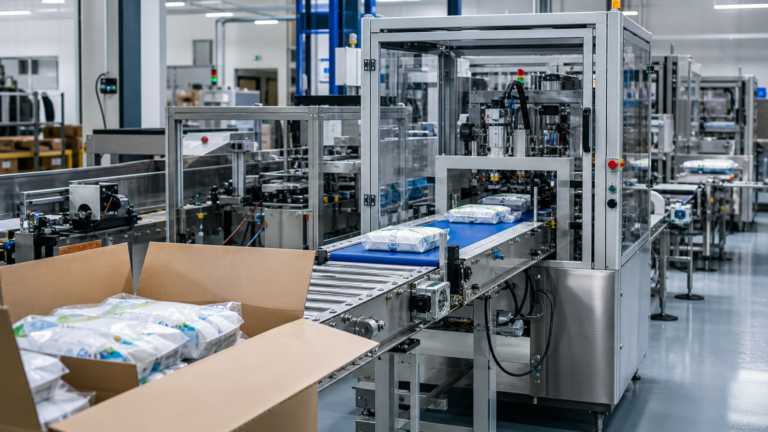


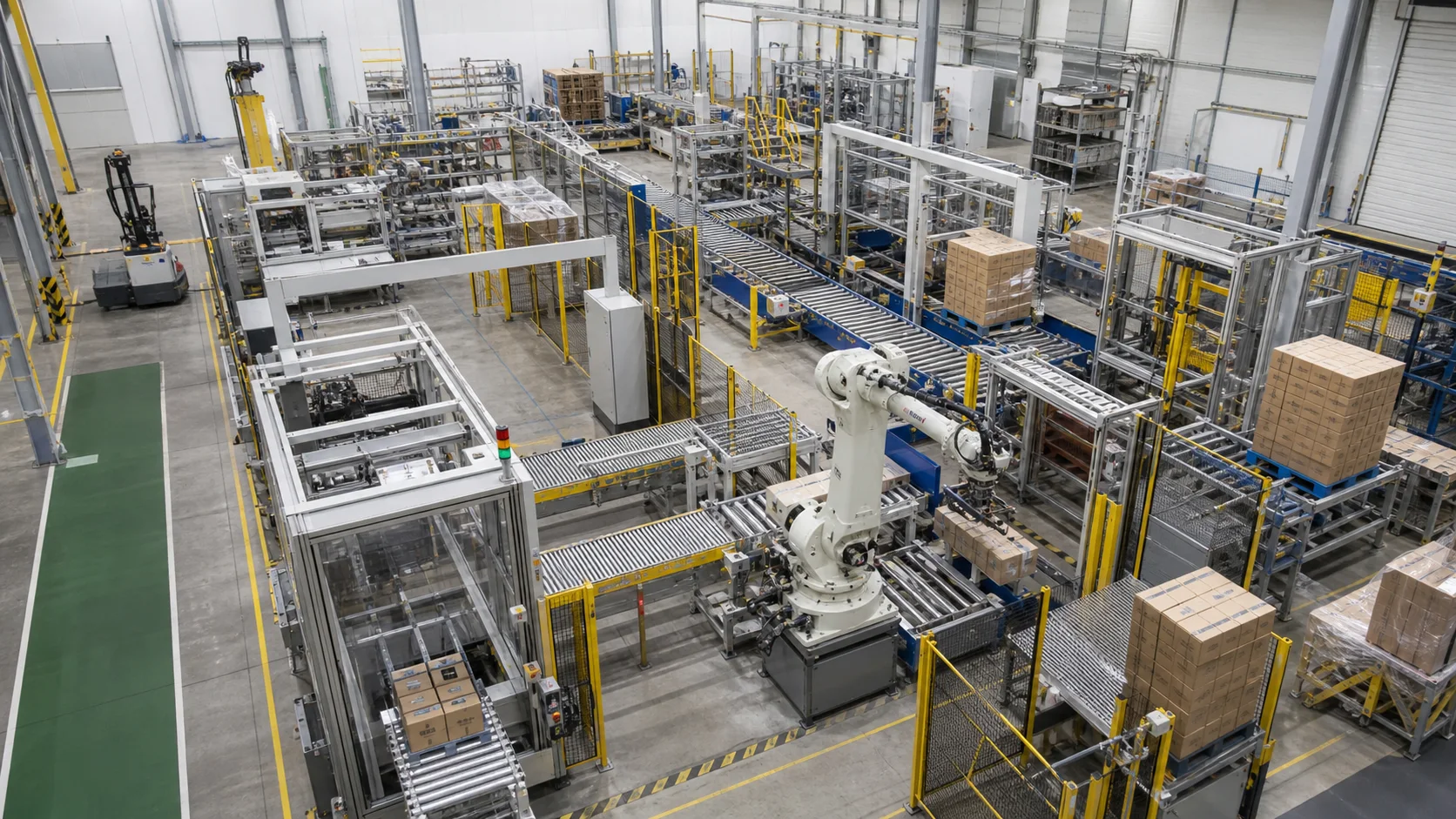
Production capacity can often be increased by improving line balance, changeovers and automation before adding more floor space. A production increase does not always require a larger building. Existing factories frequently contain unused capacity in the form of recurring stops, unbalanced machines, long changeovers, excessive product movement and equipment that is arranged around historical needs rather than current demand.
The first objective should be to increase accepted output from the available hours and floor space. This article explains how line data, packaging automation, layout changes and operating standards can support additional capacity before a factory commits to physical expansion.
Define Practical Production Capacity
Nameplate speed describes what an individual machine may achieve under specified conditions. Practical capacity is accepted finished output over the available production schedule after normal changeovers, quality checks, material replenishment, planned maintenance and routine short stops.
Separate Demand from Capacity
Confirm the additional volume required by product and period. A seasonal peak may need a different solution from permanent annual growth. The capacity plan should also identify whether the extra output must be produced on the current shift pattern or whether additional hours remain available.
Measure Accepted Units per Scheduled Hour
This measure connects output with the time the line was expected to operate. It highlights the combined effect of speed, stops and quality loss without relying on a single machine cycle.
Use Product-Level Data
Average figures can conceal a product that consumes disproportionate changeover or running time. Record performance by SKU or format family wherever practical.
Find the Process That Limits Total Output
Increasing the speed of a non-constraining machine may only create more accumulation. Observe where products consistently wait and where downstream stations are regularly starved. Stop records, queue levels and cycle studies help identify the true constraint.
Protect the Constraint from Avoidable Stops
Ensure materials are prepared, quality checks are organized and upstream flow is reliable. Maintenance priority should reflect the effect on total output rather than treating every machine stop as equally important.
Improve the Constraint Before Adding Equipment
Review operating settings, product presentation, material quality and minor-stop causes. A modest improvement at the constraint can create more finished output than a larger improvement elsewhere.
Balance Product Flow and Accumulation
Connected equipment should share clear ready, running, blocked, starved and fault states. Coordinated speed control prevents one machine from repeatedly pushing products into a stopped downstream station.
Size Buffers from Real Stop Patterns
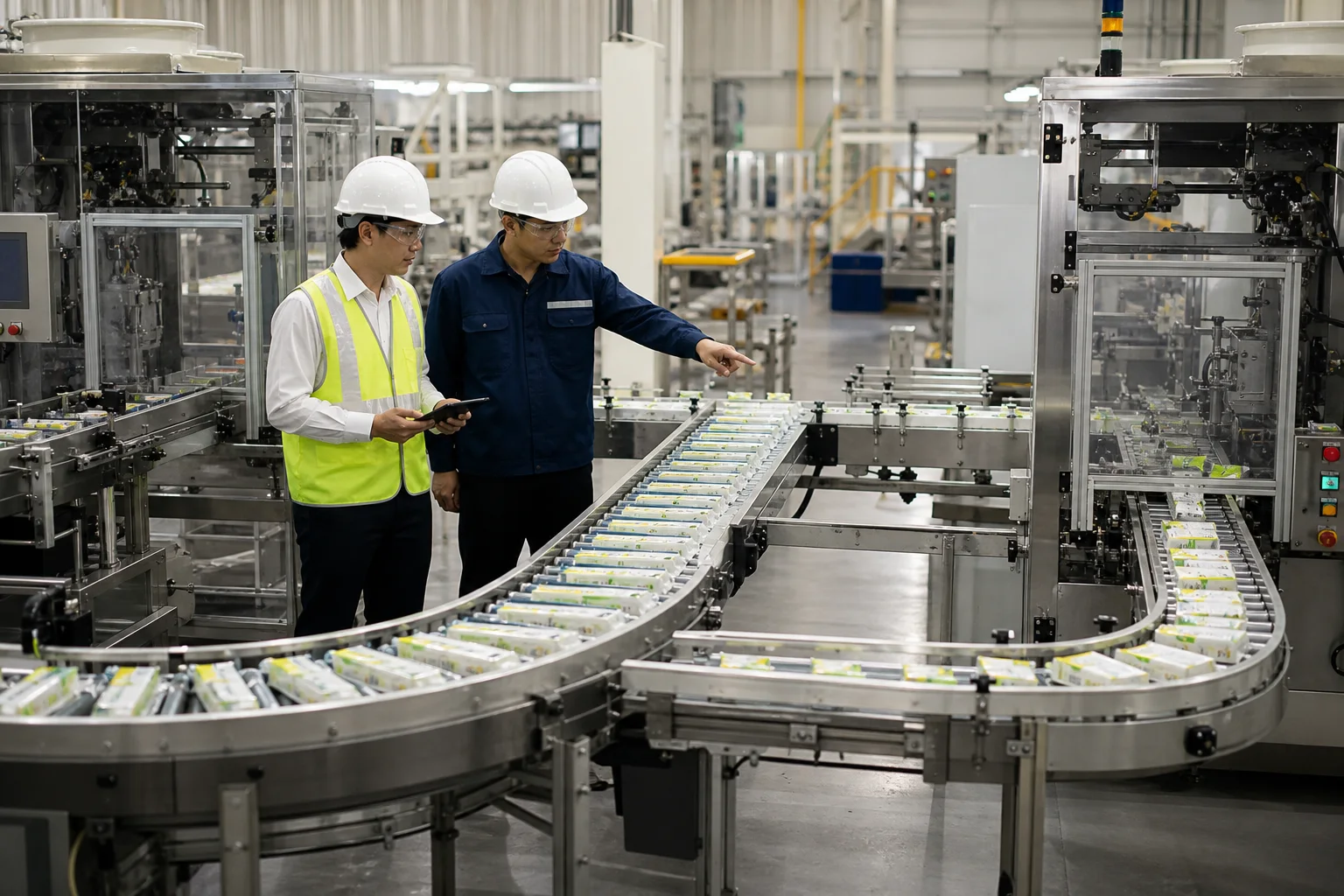
A buffer should cover the short interruptions that occur often enough to affect output. Excessive accumulation consumes space, increases product handling and may make recovery slower. Low-pressure conveying and controlled release are important for unstable or easily damaged packs.
A structured integrated packaging system can coordinate machine interfaces, conveyors and operating states across the line.
Reduce Changeover and Start-Up Time
When a line produces many formats, changeovers can consume a significant share of scheduled time. Record the sequence from the final accepted pack of one product to the first accepted pack of the next.
Move Preparation Outside the Stopped Period
Prepare materials, tools, labels and format parts before production stops. Identified storage positions and a defined checklist reduce searching and repeated adjustment.
Use Repeatable Settings
Scales, position indicators, recipes and dedicated format parts help the line return to an approved condition. Confirm quality at agreed checkpoints rather than making several unrecorded adjustments after start-up.
Automate Work That Limits Capacity
Automation should be directed at a measured restriction. Product feeding, counting, wrapping, cartoning, coding, inspection, case packing or palletizing may be suitable depending on where the line loses time.
Select Equipment Around Product Behavior
Stable repetitive products may suit dedicated mechanisms, while variable pack patterns may benefit from robotics. The full size range, surface, weight, orientation and tolerance for contact must be tested.
Use Automation to Extend the Useful Shift
A consistent machine cycle can reduce the variation associated with fatigue and repeated manual handling. However, materials, quality checks, maintenance and downstream logistics must remain available at the new rate.
The guide to high-speed packaging solutions explains how feeding, inspection and end-of-line equipment must operate at compatible rates.
Use Existing Factory Space More Effectively
A layout review should include product travel, material presentation, operator movement, maintenance access, guard opening and waste removal. Machines placed close together are not necessarily space-efficient if they create difficult work or long conveyor routes.
Remove Unnecessary Transport and Staging
Repeated transfer between pallets, tables and conveyors consumes floor area and labor. Direct connections or compact transfer systems can release space while reducing handling.
Consider Vertical and Overhead Opportunities Carefully
Elevated conveyors, compact case handling and vertical accumulation may release floor space where access, cleaning and structural conditions permit. Safety and maintenance requirements should be reviewed before adopting the layout.
Preserve Safe Operating Access
Capacity should not be gained by restricting emergency routes, maintenance clearance or material handling. A compact design must still function as a practical workplace.
Build a Phased Capacity Improvement Plan
| Phase | Typical Action | Verification |
|---|---|---|
| Stabilize | Correct recurring stops and material issues | Accepted units per scheduled hour |
| Balance | Adjust speeds, buffers and interfaces | Constraint utilization and queue behavior |
| Standardize | Improve changeovers and maintenance | Changeover and downtime records |
| Automate | Upgrade the verified capacity constraint | Sustained finished output and quality |
Evaluate investment only after the expected capacity benefit and operating cost are defined. The sequence for adding robots to a packaging line provides further guidance for robotic applications.
Frequently Asked Questions
What should be improved first?
Begin with the constraint and the most frequent verified causes of lost output. Improvements elsewhere may not increase total capacity.
Will a faster packaging machine always increase capacity?
No. Upstream supply, inspection, accumulation and end-of-line handling must support the new rate. The complete line should be studied.
When is factory expansion appropriate?
Expansion becomes relevant when verified demand exceeds the practical capacity of an optimized operation or when required products, utilities, storage and logistics cannot be accommodated safely in the existing building.
Review Capacity Within Your Existing Factory
Newgate Machine can review products, production targets, machine interfaces and available space to help define a packaging layout and automation scope for additional capacity.