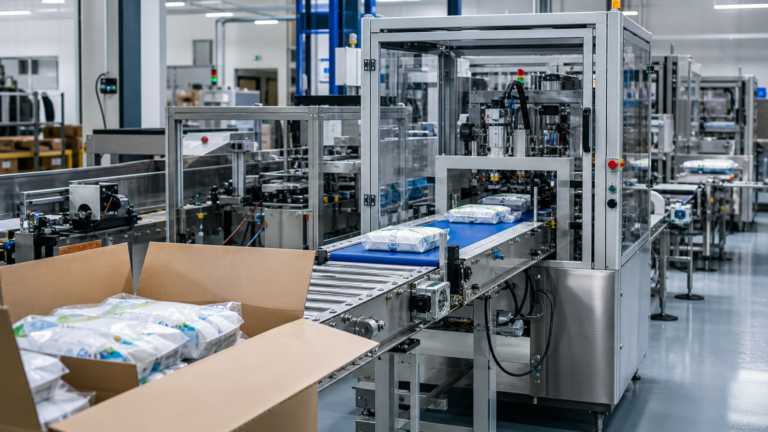



Retail packaging should support both product presentation and repeatable production, so shelf impact remains consistent from run to run. A product competes for attention long before a customer reads a detailed description. Clean graphics, consistent shape, dependable closure and a shelf-ready format help the product appear organized and easy to understand at the point of sale.
The factory has a direct role in that experience. Well-chosen packaging machinery helps repeat the approved presentation across production runs, reducing the variation that can make a shelf display look uneven.
Start with the Shelf Moment
Retail presentation should be considered during package design and not only after the product is complete. Check how the pack faces forward, stacks, opens, carries required information and performs under ordinary transport and shelf handling. A format that looks clear in a studio may need adjustments when grouped with other units.
Build Consistency Into Every Pack
Pack dimensions, fill appearance, label position, code location and carton closure should remain within an agreed standard. The useful target is not cosmetic perfection in one sample; it is a process that repeatedly produces an acceptable result across shifts, materials and normal operating conditions.
Make the Requirement Measurable
Use a measurable condition that operators, engineers and commercial teams can review together. integrated packaging system can be included where equipment interfaces or wider line coordination affect the outcome.
Check the Product Under Real Conditions
Use representative packaging materials and normal production settings during trials. This reveals issues that may not appear with a single prepared sample.
Keep Brand Standards Practical
A standard works best when operators can see, measure and apply it during normal production.

Use Shelf-Ready Secondary Packaging
Shelf-ready trays, display cartons or well-designed case formats can reduce handling at the retail end and keep products in their intended orientation. The design should balance retail visibility with protection during transport and practical loading at the factory.
Measure the Presentation You Intend to Protect
Track reject reasons that affect appearance, including scuffed packs, incomplete closures, damaged cartons and incorrect labels. Review both the rate and the cause. This creates an improvement loop between commercial expectations, product design and manufacturing operations.
Retail Packaging Planning for Consistent Shelf Presence
Retail packaging works best when the shelf objective is translated into clear production requirements. A pack that looks strong in design review must also remain consistent after filling, sealing, coding, case packing, transport and store handling. For this reason, the packaging brief should connect visual presentation with measurable production details such as pack orientation, seal position, carton squareness, label placement and case count.
The production team can support shelf presence by defining what a good pack should look like before the line is running at full speed. This includes acceptable variation for carton shape, film tension, product position, barcode readability and secondary packaging. When these standards are agreed early, operators have a clear reference and quality checks become easier to repeat across shifts.
Coordinate Primary and Secondary Packs
Retail packaging is not limited to the item seen by the shopper. Shelf-ready trays, cartons, shrink bundles and transport cases all influence how the product arrives and how quickly it can be presented. The primary pack should fit correctly inside the secondary pack, while the secondary pack should protect the retail-facing surface and keep product orientation stable.
If the product uses several SKU sizes, the packaging line should be reviewed with the full range in mind. Change parts, guides, sensors and coding positions may need to support more than one format. Planning these details helps maintain a consistent retail presentation without treating each promotion or product size as a separate project.
Use Production Data to Support Shelf Quality
Useful data may include reject reasons, coding checks, case counts, downtime causes and operator adjustments. Reviewing this information gives the team a practical way to improve retail packaging quality over time while keeping the process controlled and repeatable.
Measurement Points for Retail Packaging
Retail packaging should be reviewed with simple measures that connect the factory result to the shelf result. Useful checks include the number of acceptable packs per hour, rejected packs by cause, case damage, label alignment, code readability and the condition of display-ready packs after handling.
These measures help the team see whether the packaging line is protecting shelf presentation consistently. They also create a shared language between production, quality and sales teams. When a retail customer requests a different format, the factory can compare the new requirement with proven operating data instead of starting from assumptions.
Review After Each Important Retail Run
A short review after major runs helps confirm what worked well and what should be improved before the next order. This keeps retail packaging practical, measurable and connected to real production conditions.
Practical Steps for Implementation
A practical improvement program is easier to sustain when the intended result, current state and verification method are agreed before changes are made.
- Define the product-facing orientation and shelf-ready requirements.
- Agree visible acceptance points for graphics, closure and carton condition.
- Test the package through the full packing and distribution sequence.
- Record recurring presentation defects and correct the related process condition.
Frequently Asked Questions
Does shelf impact depend only on graphic design?
No. Graphic design is important, but the pack must also arrive at retail in the intended condition and orientation.
Can one packaging line support several retail formats?
Yes, when the format range, changeover method and required materials are defined during equipment selection.
How can a factory protect presentation during transport?
Review case packing, product spacing, carton strength and pallet handling together rather than treating them as separate activities.
Plan Packaging That Supports Retail Presentation
Newgate Machine can help review pack format, production flow and end-of-line handling to support a consistent product presentation from factory to shelf.