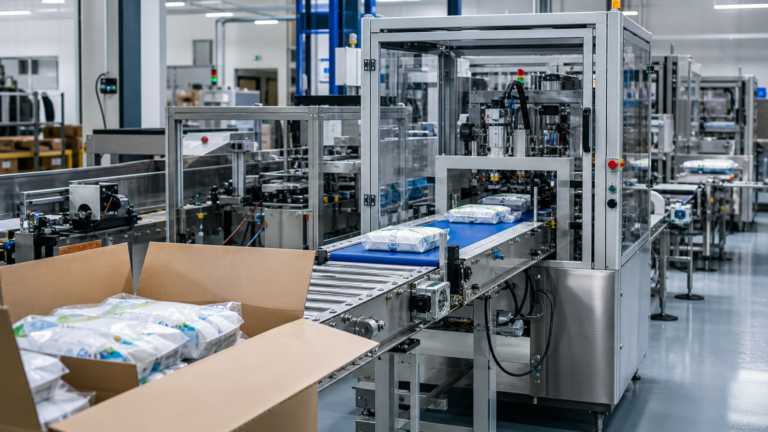


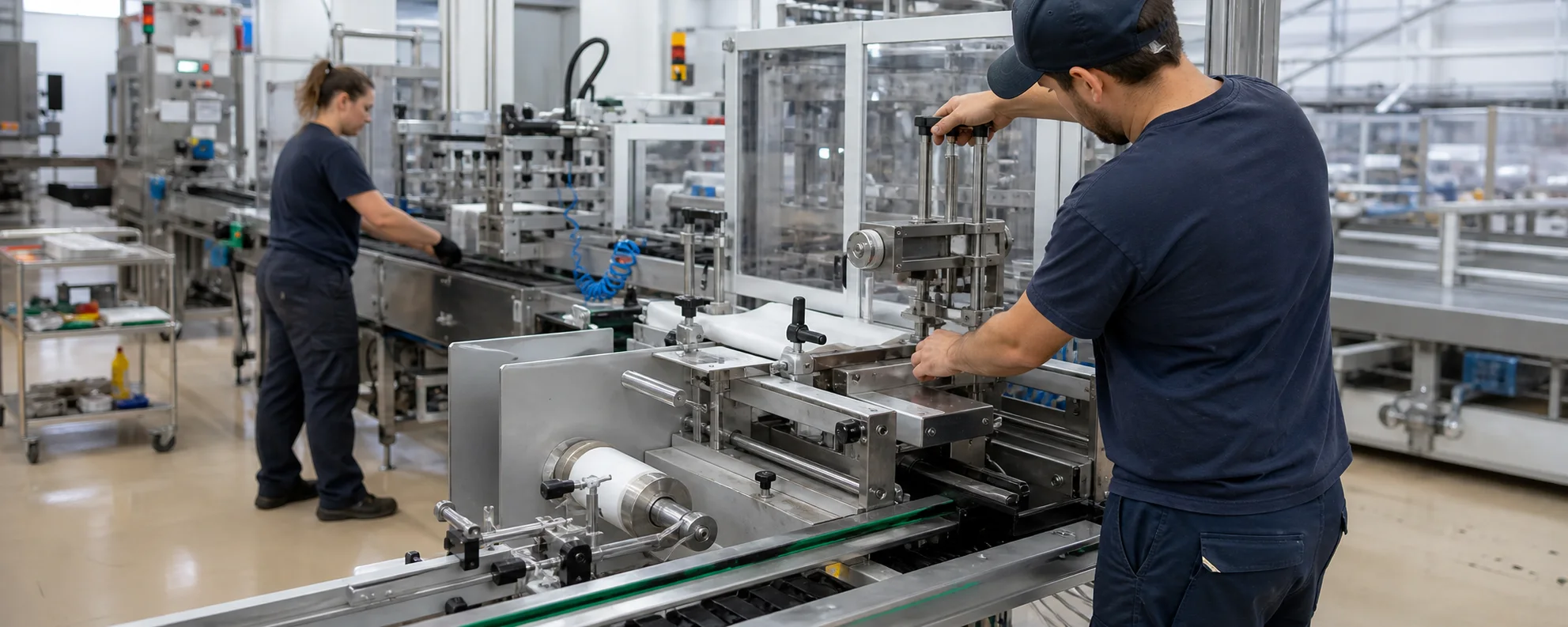
Packaging line changeover time should be treated as a measurable production activity, from the last good pack to the first approved pack of the next run. Changeovers are necessary when a line handles different products, pack sizes or materials. The goal is not simply to change faster; it is to return the line to approved production safely, with the right materials, settings and quality checks completed.
A practical improvement begins by observing the entire changeover from the last accepted pack of one product to the first accepted pack of the next.
Measure the Current Changeover
Record every task, its duration and whether the machine must be stopped. Include cleaning, material removal, format adjustment, code preparation, sample approval and start-up losses. This creates a shared baseline for improvement.
Prepare External Work Before the Line Stops
Format parts, labels, film, cartons, tools and documents can often be prepared while the current product is still running. This reduces searching and allows the stopped period to focus on tasks that genuinely require access to the machine.
Make the Requirement Measurable
Use a measurable condition that operators, engineers and commercial teams can review together. high-speed line planning can be included where equipment interfaces or wider line coordination affect the outcome.
Keep the Sequence Visible
A short practical checklist helps each operator follow the same preparation and confirmation steps.
Review the Difficult Formats
The slowest or least stable format usually provides the clearest opportunity for changeover improvement.
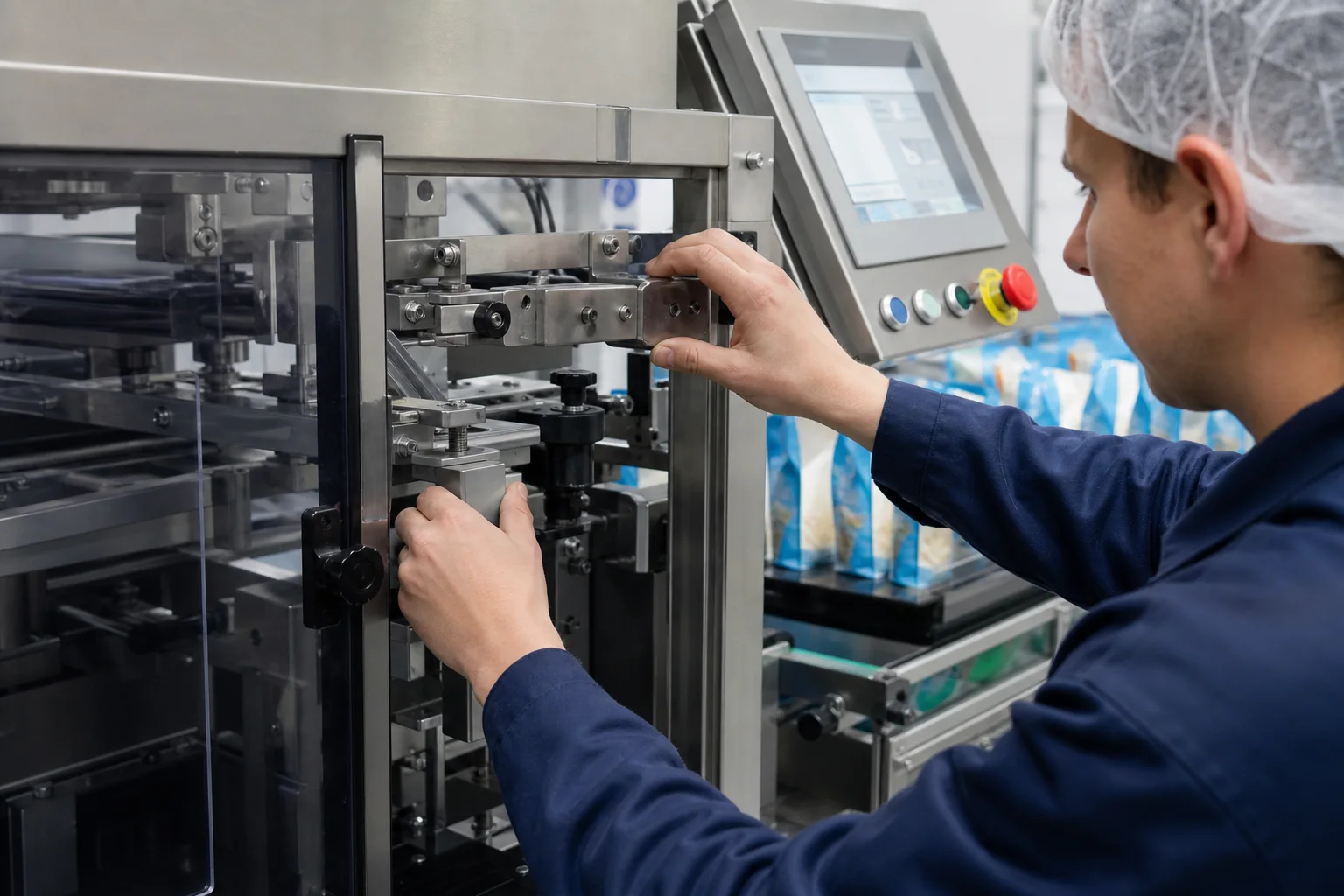
Use Repeatable Settings and Format Parts
Position indicators, scales, recipes and dedicated parts reduce repeated trial-and-error adjustment. Store parts in identified locations and keep their condition under control so that the approved setting can be reproduced.
Confirm Quality at Defined Points
The first packs after a changeover should be checked against agreed criteria. A structured confirmation is more reliable than continuing to adjust while output enters downstream handling.
Building a Repeatable Changeover Method
Reducing packaging line changeover time is most effective when the method is repeatable. A fast changeover should not depend only on the most experienced operator. The line should have clear preparation steps, identified tools, labeled change parts, recorded settings and a practical sequence that can be followed across shifts.
Preparation should begin before the current run ends. Materials, cartons, film, labels, tools and cleaning items can be staged in the correct area. When the next SKU is ready, the team spends less time searching for parts or confirming basic information. This supports smoother changeovers without increasing pressure on operators.
Separate Internal and External Work
One practical approach is to separate work that must happen while the line is stopped from work that can be completed while it is still running. External tasks may include checking materials, preparing documents, cleaning nearby tools or confirming the next recipe. Internal tasks include physical changes that require the machine to stop. Moving suitable work outside the stop window can reduce downtime while keeping the process controlled.
After each changeover, record the actual time and the main causes of delay. These records help the team improve the method gradually. Common findings include missing parts, unclear settings, material not ready, repeated sensor adjustments or slow first-piece approval.
Standardize the First Good Pack Review
A changeover is not complete until the first approved pack is produced. Define who approves it, what must be checked and how the result is recorded. This keeps packaging changeover improvement connected to quality, not only speed.
Changeover Metrics That Support Improvement
Packaging line changeover time should be measured from the last good pack of the previous run to the first approved pack of the next run. This definition keeps the focus on usable production, not only mechanical adjustment. It also connects speed improvement with quality approval.
Useful records include total changeover time, waiting time, missing parts, cleaning time, first-piece approval time and repeated adjustments. Reviewing these details helps the team find improvement opportunities without relying on general impressions.
Improve One Step at a Time
The best results often come from small, repeatable changes. Clear labeling, prepared parts, standard settings and better approval flow can reduce packaging changeover time while keeping the process stable.
Practical Steps for Implementation
A practical improvement program is easier to sustain when the intended result, current state and verification method are agreed before changes are made.
- Map and time the current sequence.
- Move preparation tasks outside the stopped period.
- Standardize settings, tools and format-part storage.
- Verify first-off quality and update the work standard.
Frequently Asked Questions
What is a good changeover target?
The suitable target depends on product range, cleaning needs and quality requirements. Improve from a measured baseline.
Do recipes eliminate the need for operator checks?
No. Recipes support repeatable settings, while operators still confirm materials, mechanical condition and first-off quality.
Can changeover work affect safety?
Yes. Tools, guards, energy isolation and access must remain controlled even when the objective is faster return to production.
Improve Packaging Changeovers
Newgate Machine can review format range, adjustment points and line layout to help define a practical changeover method.