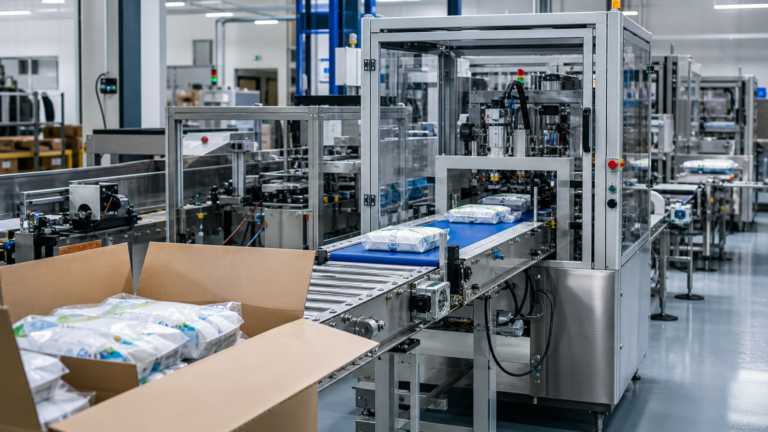


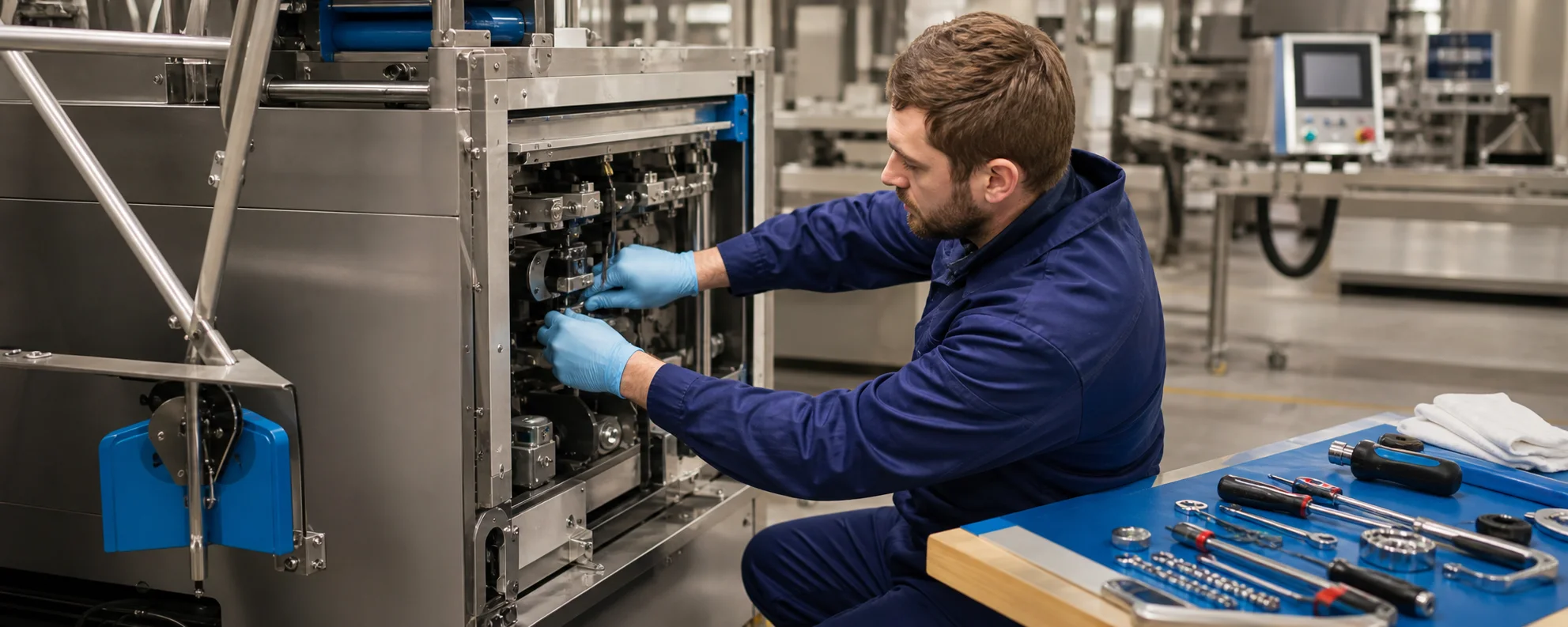
Preventive maintenance helps a packaging line operate with fewer unexpected interruptions and more predictable service work. It is most effective when checks are based on the machine condition, the product environment and the consequence of a failure in the complete line.
The aim is to identify wear, contamination, misalignment or declining performance before they lead to product loss, extended downtime or unsafe operation.
Build the Maintenance Plan Around Critical Functions
Identify components that affect product flow, package quality, safety and total line output. Belts, chains, sensors, guides, heaters, vacuum cups, pneumatic valves and bearings may require different intervals and inspection methods.
Use Simple Routine Checks
Operators can often identify loose components, unusual noise, poor tracking, leaks, contamination or unstable feeding during normal cleaning and start-up. Clear daily or shift checks support early escalation without asking operators to perform tasks beyond their authorization.
Make the Requirement Measurable
Use a measurable condition that operators, engineers and commercial teams can review together. production line optimization can be included where equipment interfaces or wider line coordination affect the outcome.
Coordinate Maintenance With Production
Schedule work around production requirements where possible, but do not postpone safety-critical or quality-critical repairs without a suitable risk review.
Protect Machine Settings
After maintenance, confirm alignment, recipe values and safety functions before returning to normal production.
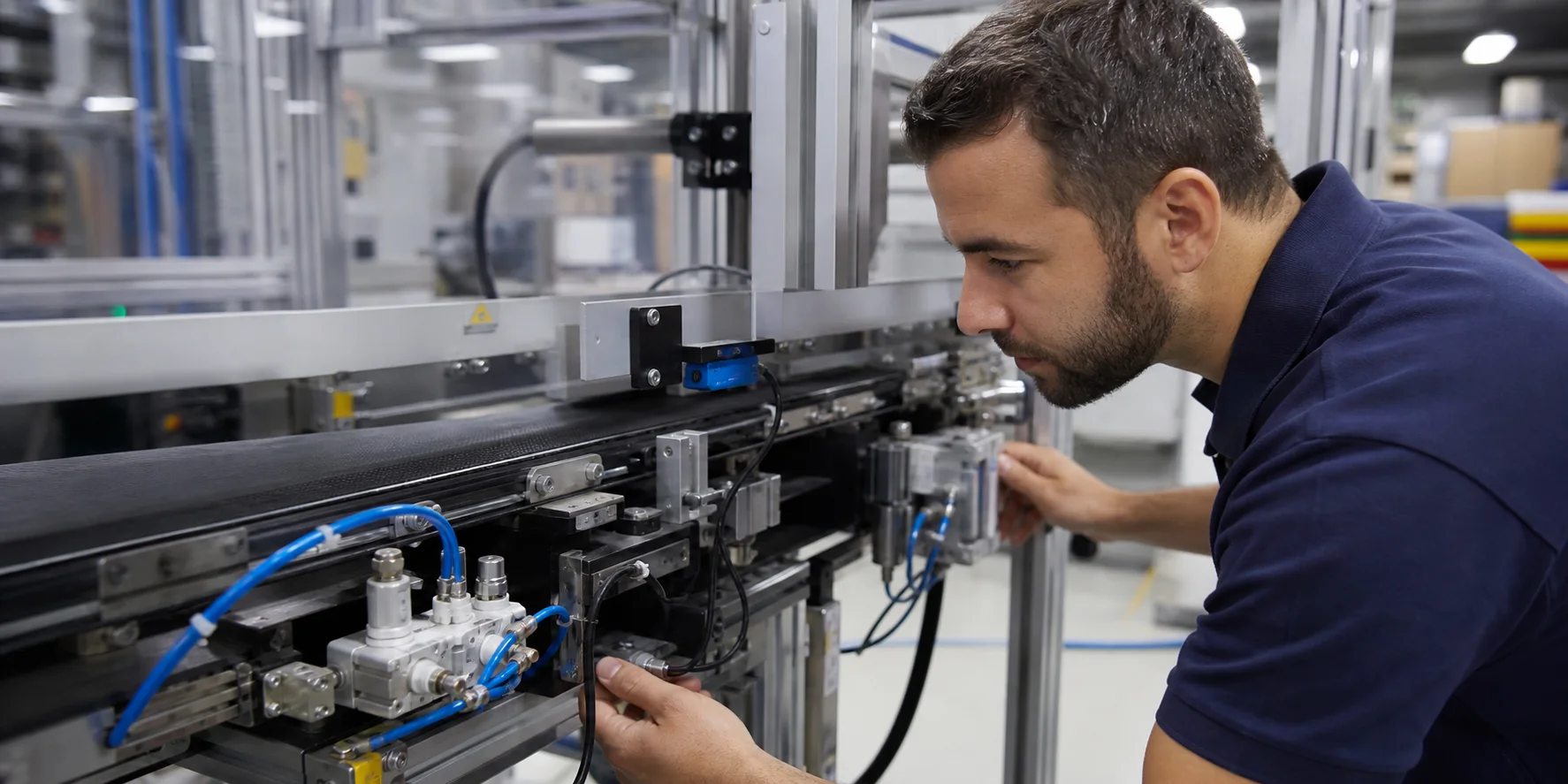
Plan Wear Parts and Spares
Keep parts according to wear rate, supplier lead time and production consequence. A low-cost component that causes a long stop may deserve closer attention than a higher-cost part with a quick replacement.
Record Findings and Repeat Failures
Service records should show the condition found, work completed, parts used and follow-up needed. Repeated faults may indicate an underlying material, alignment, control or operating issue that should be corrected permanently.
Using Maintenance Records to Protect Production Stability
Preventive maintenance is easier to manage when the factory records what was checked, what was adjusted and what should be reviewed next. Packaging machines often include belts, guides, heaters, sensors, pneumatic parts, motors, safety devices and moving assemblies. Each part may affect output differently, so the maintenance plan should be based on the actual role of the machine in production.
A useful record does not need to be complicated. It should show the date, machine, inspection item, condition, action taken, parts used and the person responsible. Over time, these records help identify patterns such as repeated belt wear, sensor contamination, unstable sealing temperature or air pressure variation.
Plan Spare Parts Around Real Risk
Spare parts planning should consider lead time, machine criticality and the effect of downtime. Some parts are inexpensive but essential for keeping the line running. Others may be used less often but take longer to obtain. A practical spare parts list helps maintenance teams respond quickly while keeping inventory controlled.
Operator involvement is also valuable. Operators often notice early changes in sound, motion, alignment or product handling before a failure occurs. When these observations are reported and recorded, preventive maintenance becomes part of normal production practice rather than a separate activity.
Review Maintenance After Production Events
After a stoppage or quality issue, review whether maintenance condition contributed to the event. This helps improve the schedule and supports a packaging machine maintenance program that is connected to actual production performance.
Operator Checks Between Maintenance Visits
Preventive maintenance is supported by simple operator checks between scheduled service activities. Operators can observe product flow, unusual sound, air leaks, belt tracking, sensor cleanliness, heater stability and safety guarding. These checks help identify small changes before they become repeated stops.
The check method should be clear and practical. A short daily or shift-based list is often more useful than a long form that is difficult to complete. When an abnormal condition is found, the reporting path should be simple so that maintenance can respond appropriately.
Connect Observations to Maintenance Planning
Operator observations become more valuable when they are reviewed with maintenance records. This helps refine the schedule and supports packaging machine reliability over time.
Practical Steps for Implementation
A practical improvement program is easier to sustain when the intended result, current state and verification method are agreed before changes are made.
- List critical machine functions and likely failure modes.
- Assign routine operator and technician checks.
- Define spare-part levels and planned service intervals.
- Review repeat stops and improve the underlying condition.
Frequently Asked Questions
How often should a packaging machine be serviced?
Use the manufacturer guidance as a starting point, then adjust according to operating hours, materials, environment and observed condition.
Can operators perform preventive maintenance?
Operators can perform authorized basic checks and cleaning. Repairs and safety-related work should follow the required training and procedures.
Why keep maintenance records?
Records show component history, support troubleshooting and help identify recurring losses that affect output.
Plan Reliable Packaging Machine Maintenance
Newgate Machine can support equipment selection, service planning and line integration for packaging operations that require dependable performance.